
Last updated September 10, 2026
Full 25-point door and opener safety check with every visit - springs, cables, rollers, tracks, and your LiftMaster or Chamberlain opener included
You get a price before we start. It does not change when the truck arrives.
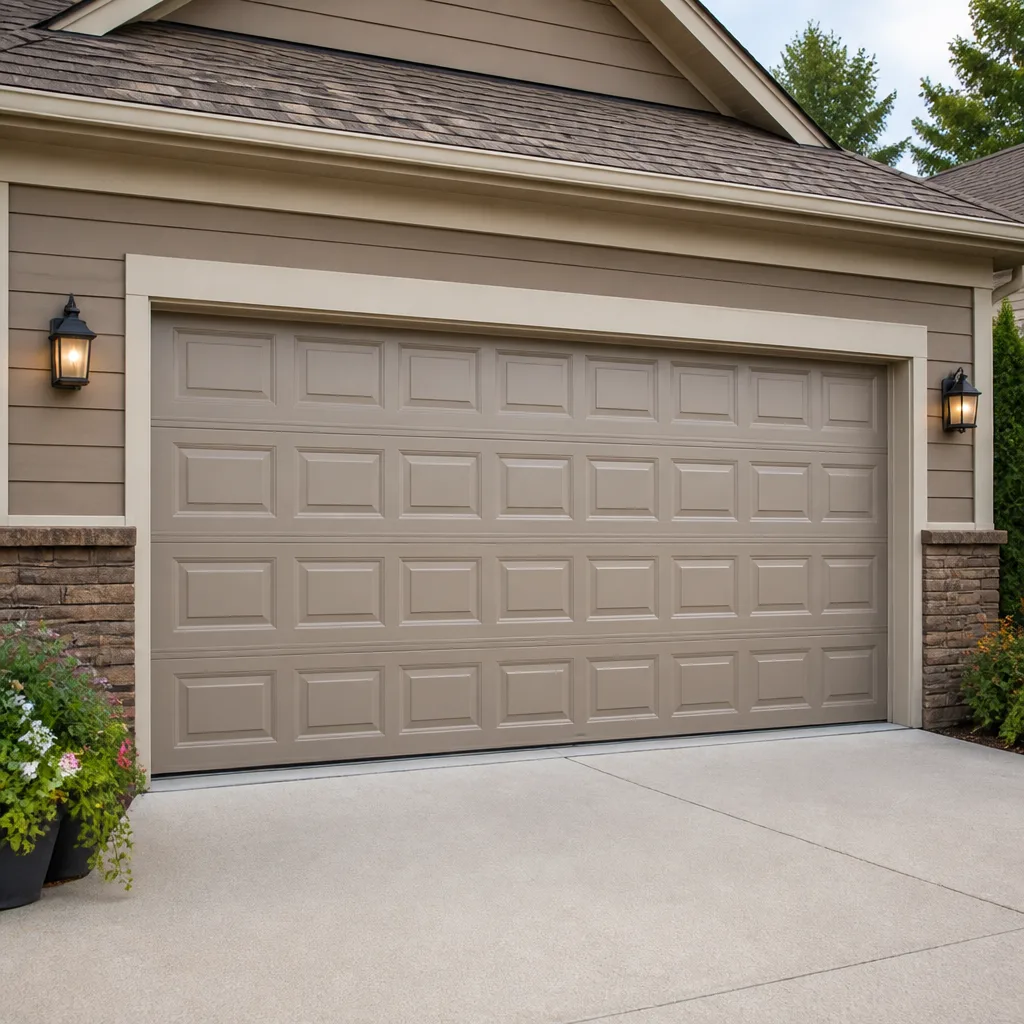
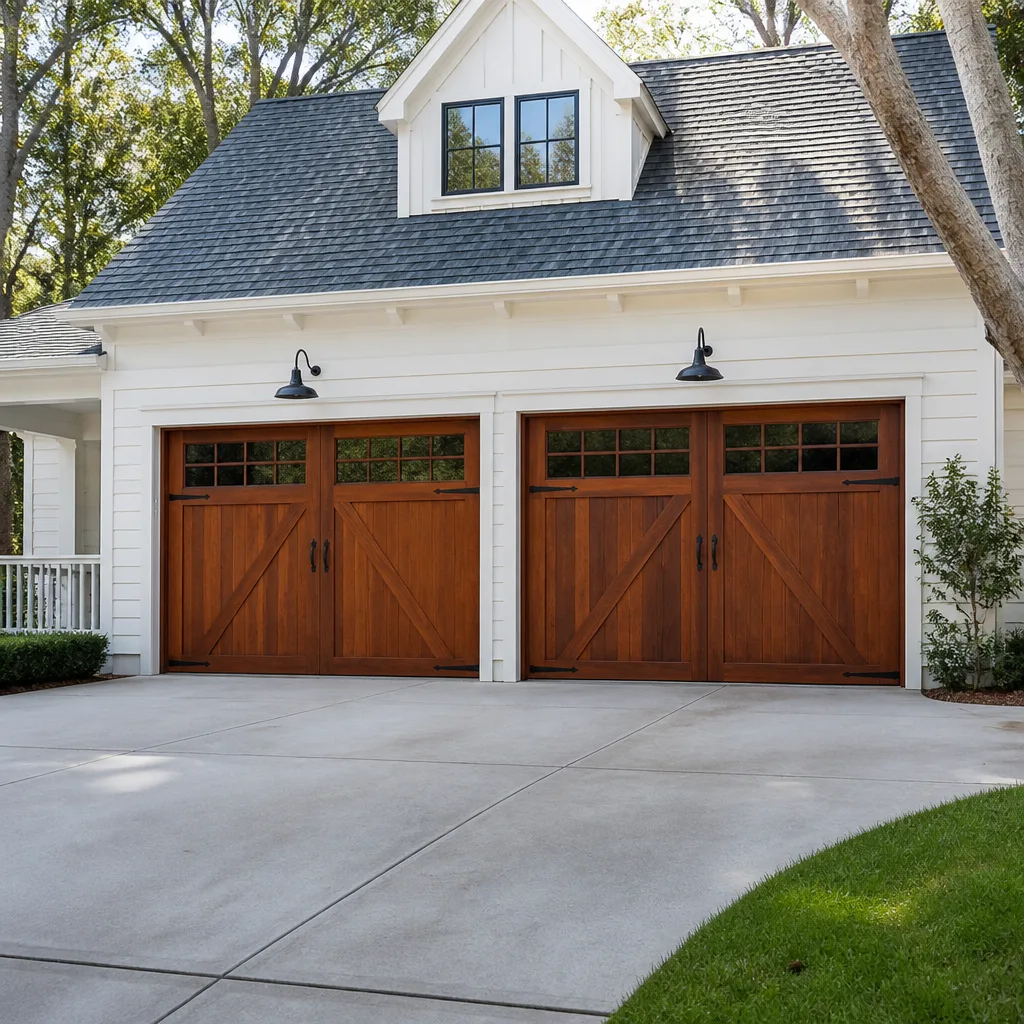
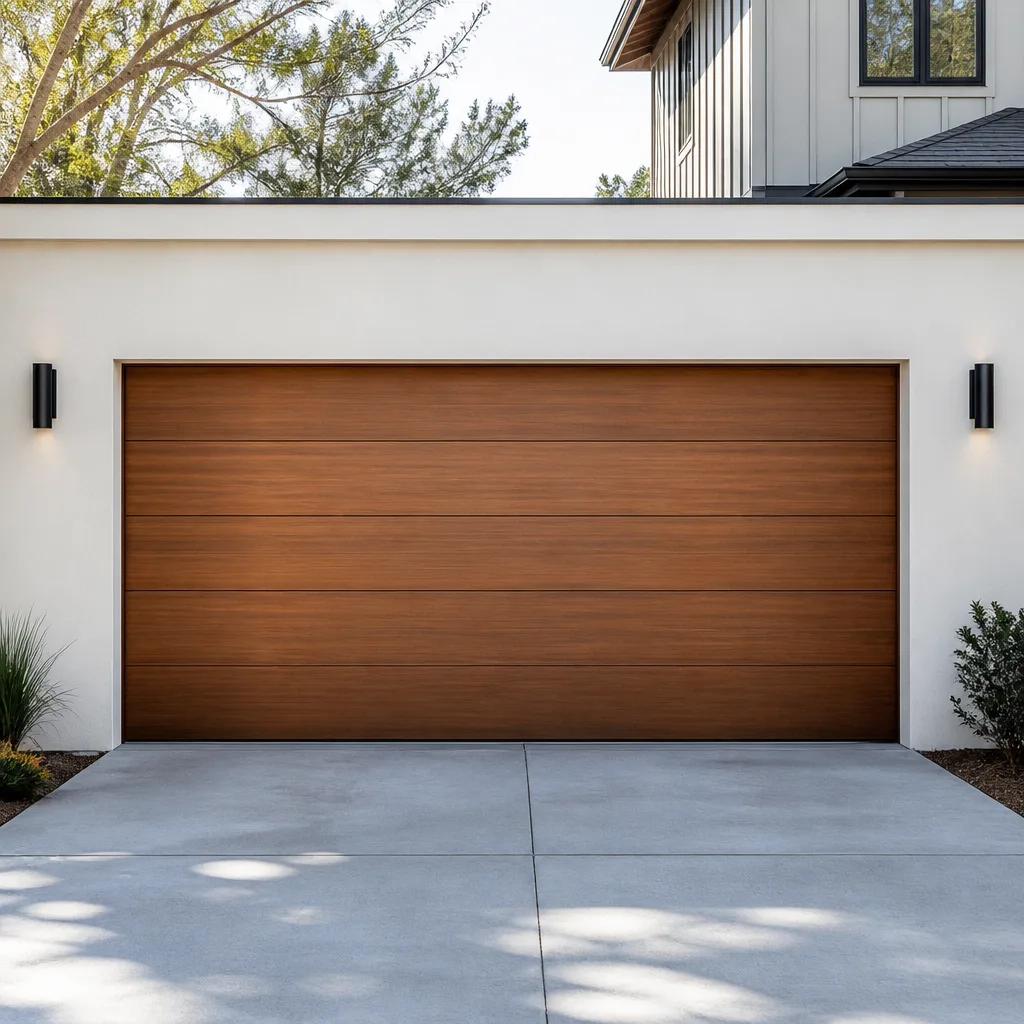
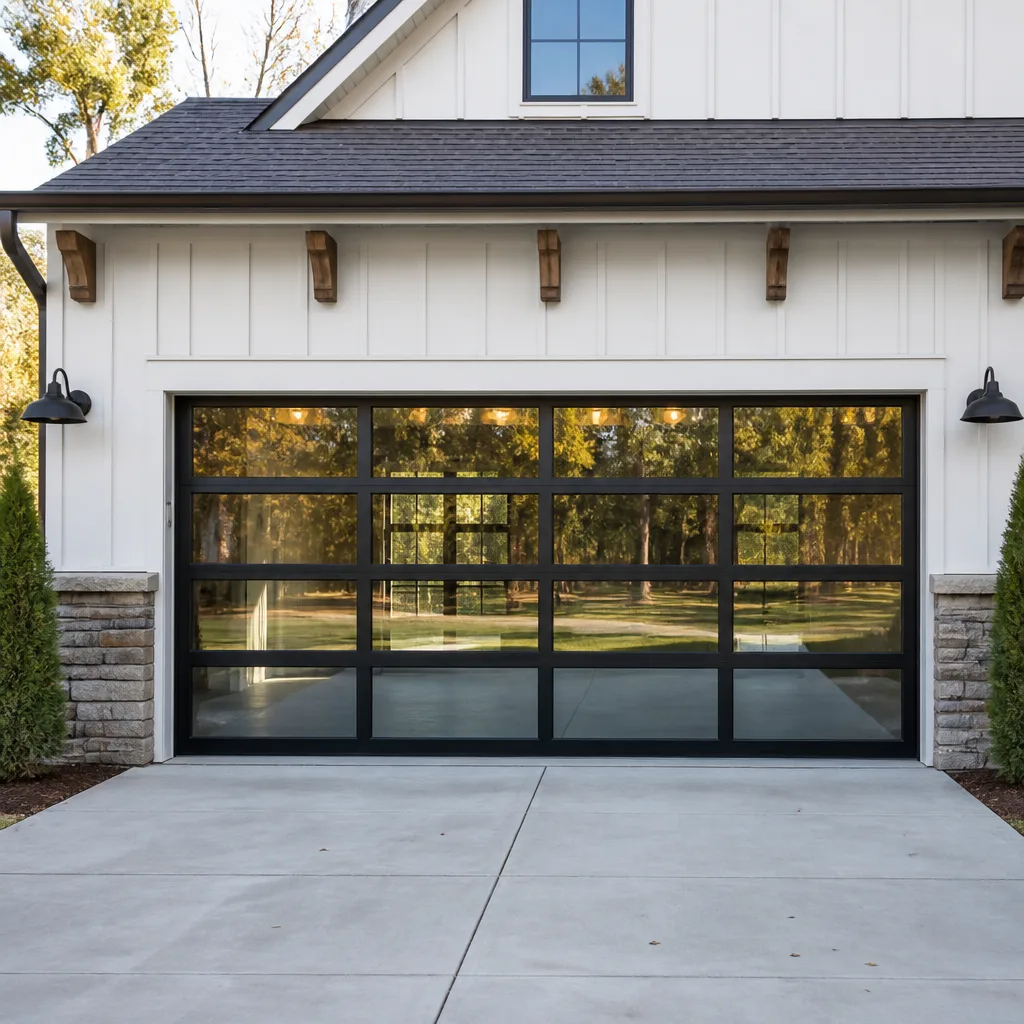
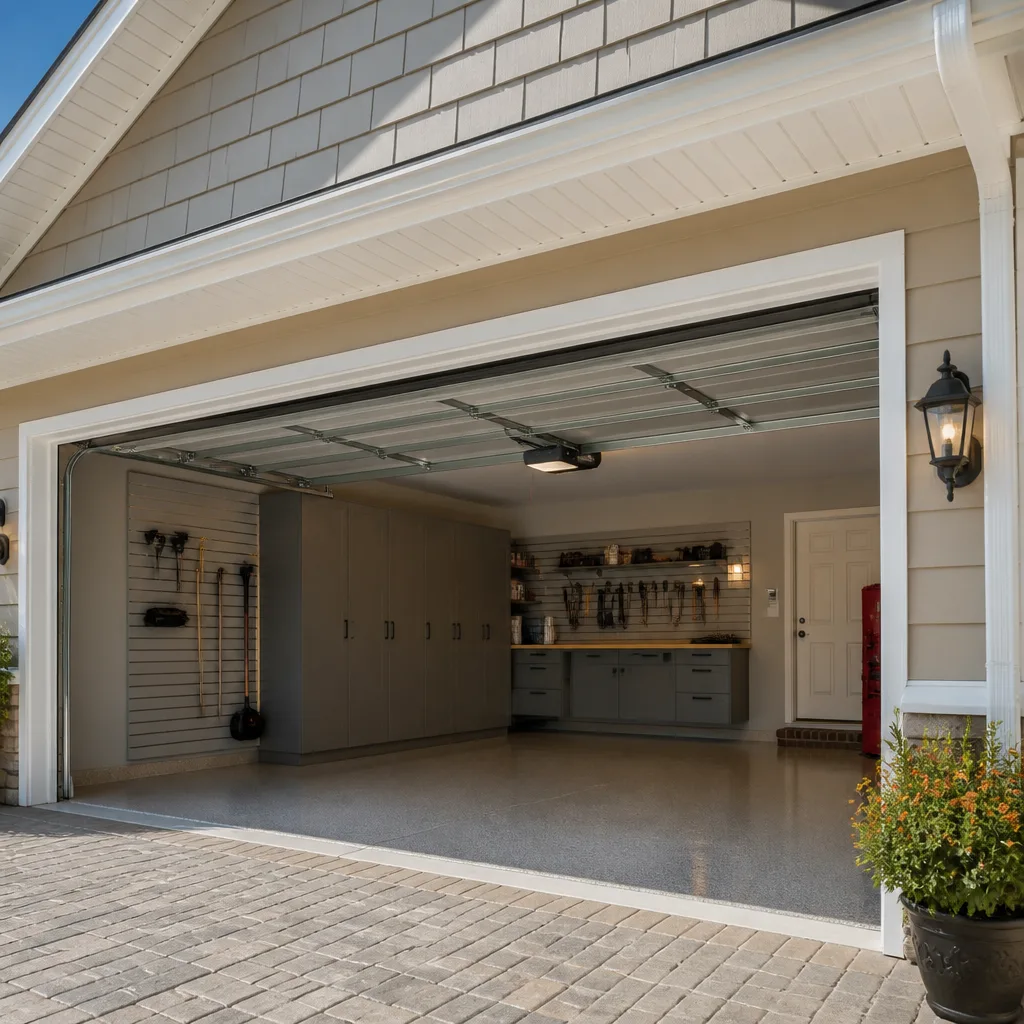
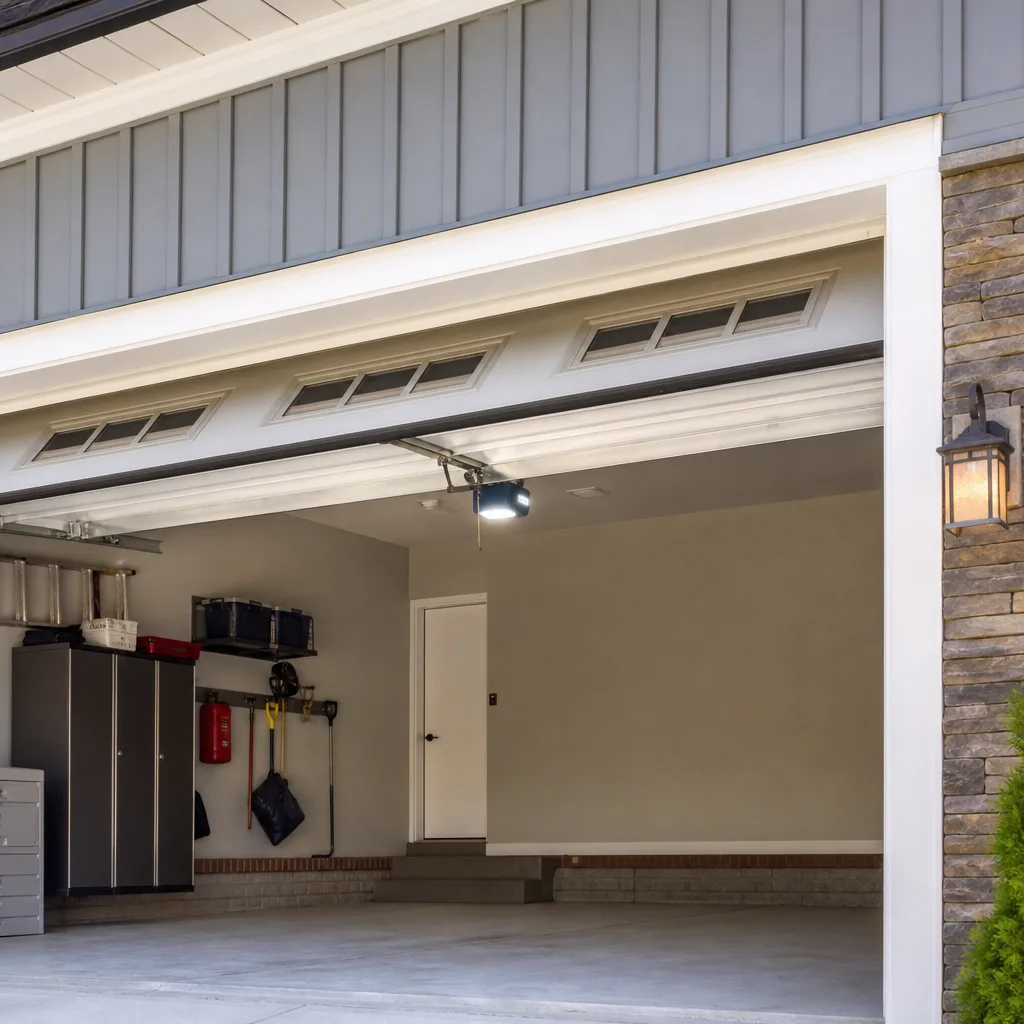
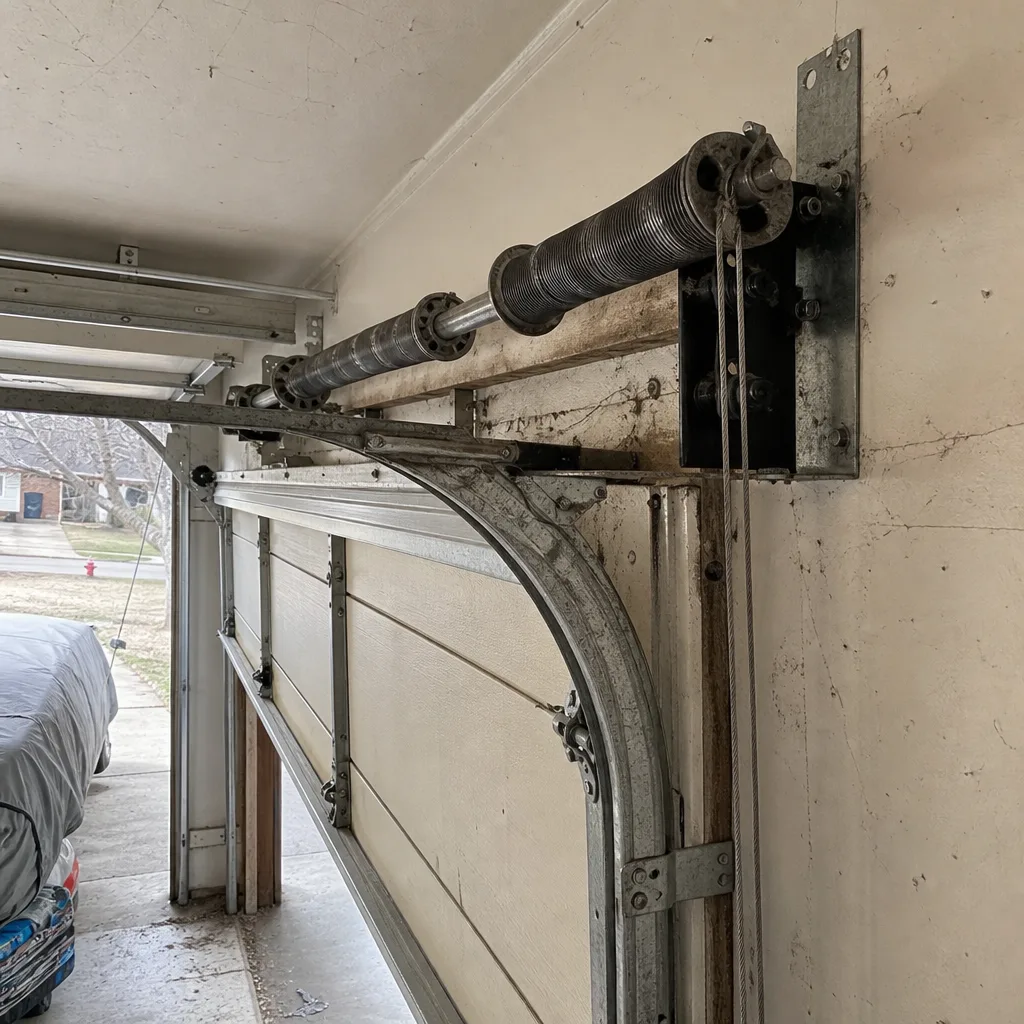 Before
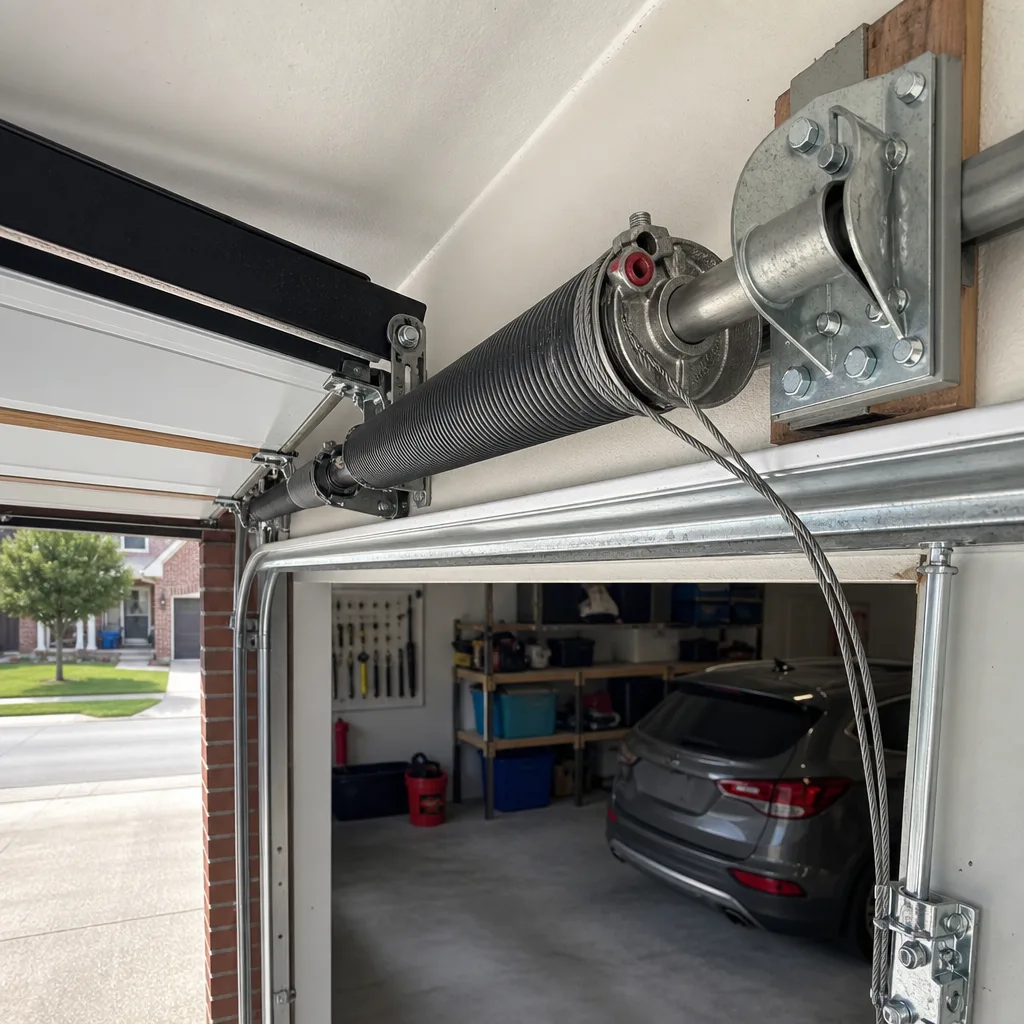 After
After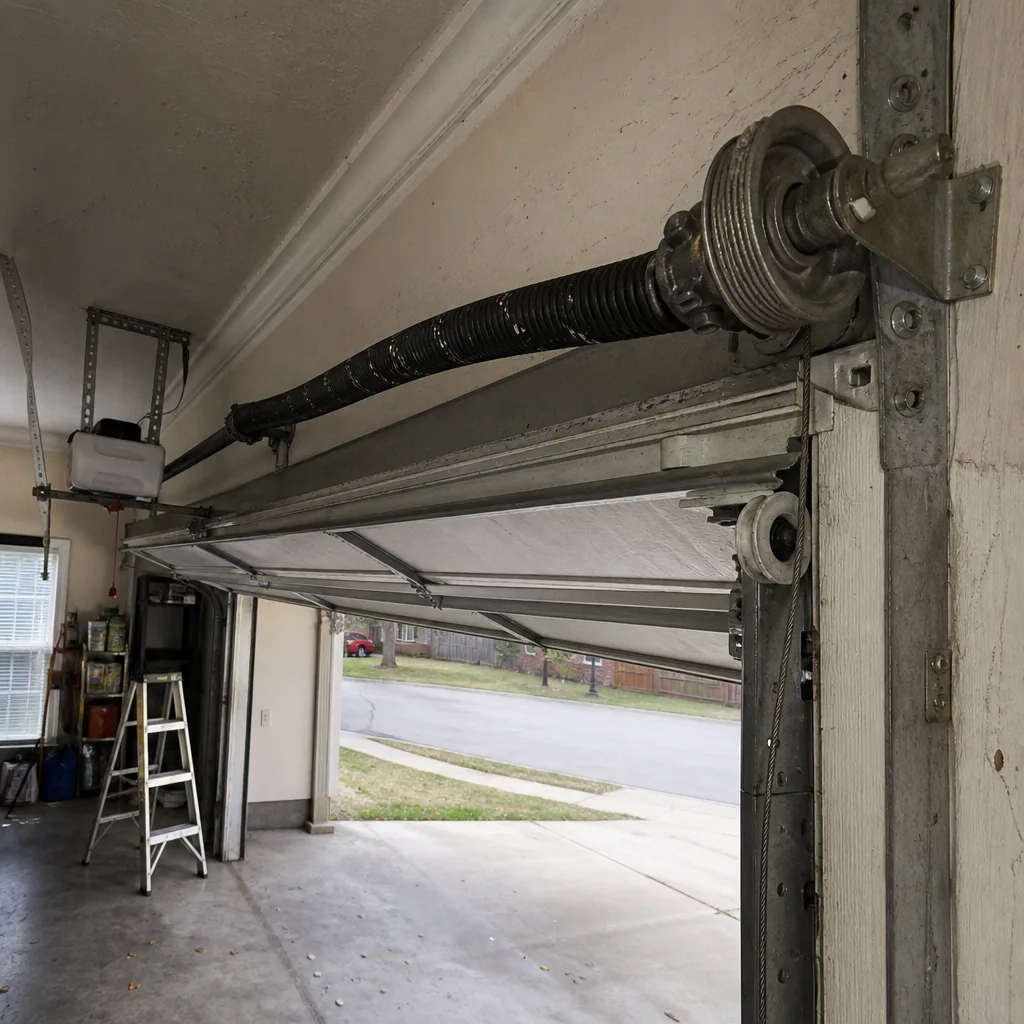 Before
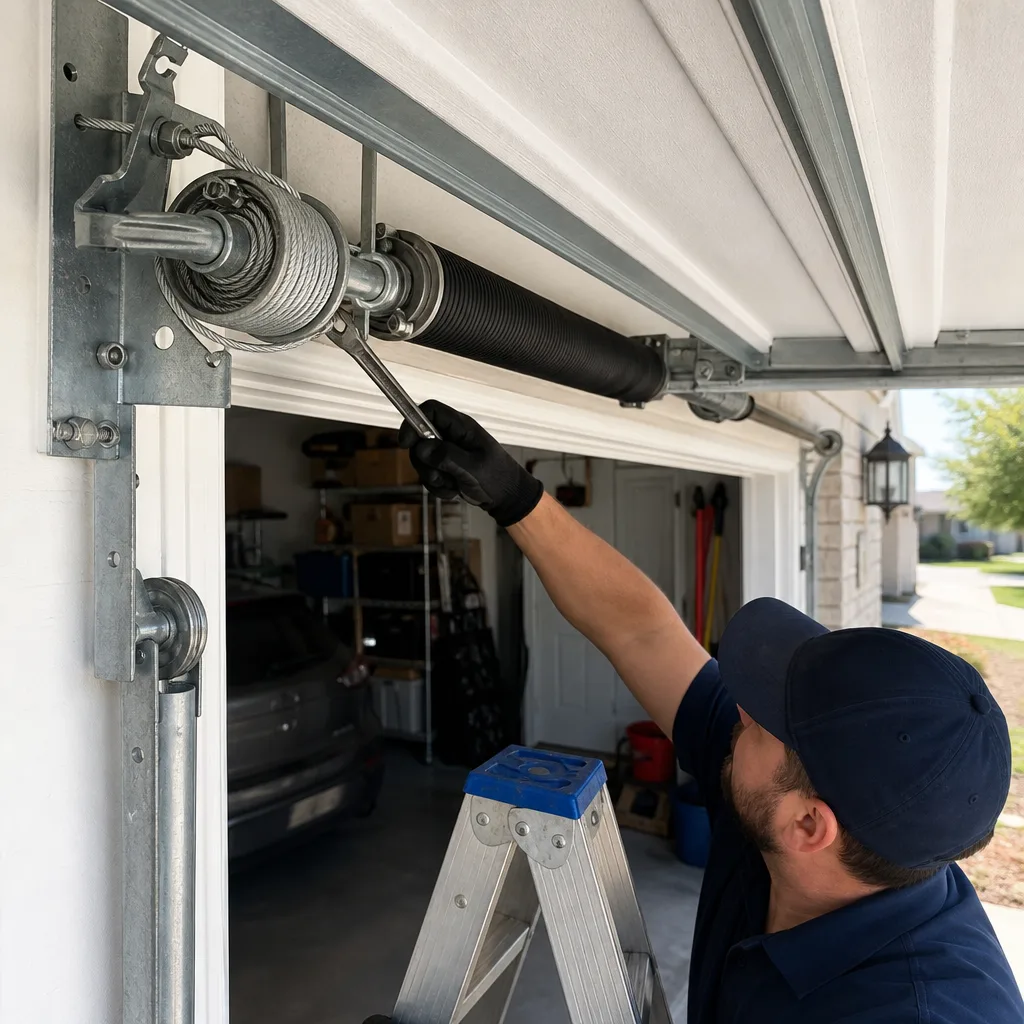 After
After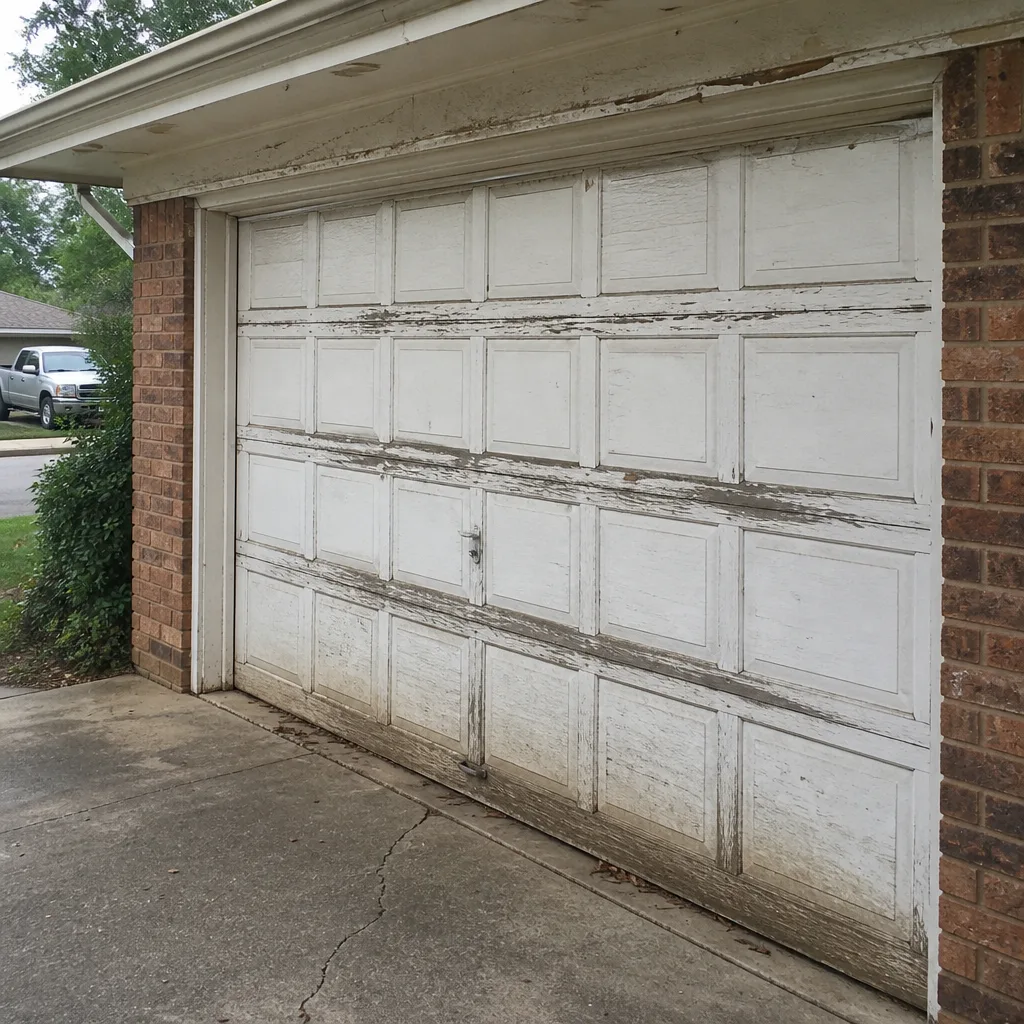 Before
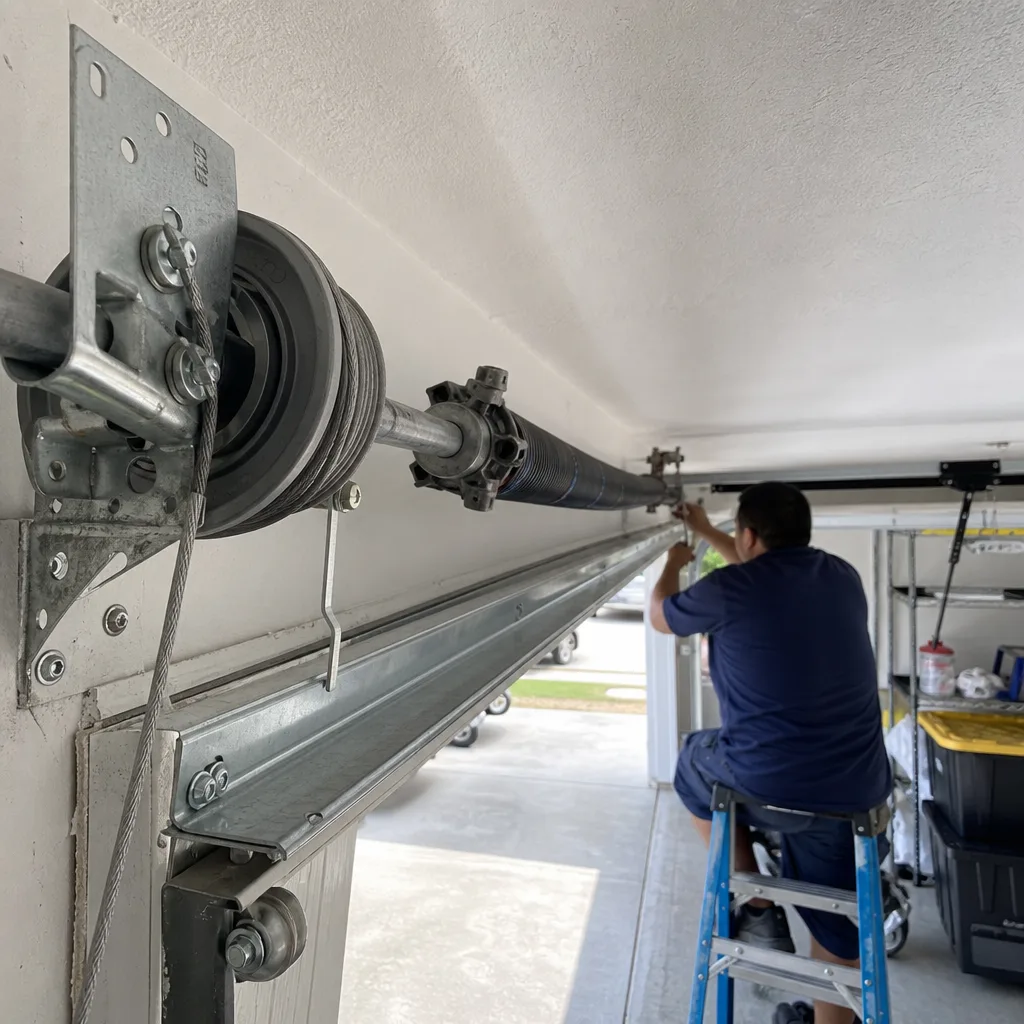 After
AfterHow to Hire a Garage Door Contractor in Fort Worth: A Step-by-Step Guide
A Fort Worth homeowner searching “garage door repair near me” on a Monday morning will get quotes from at least three companies whose nearest technician is actually in Dallas. On a phone screen, the local shop and the dispatch hub look identical. Both have Fort Worth in the name, both promise same-day service, and both claim decades of experience. The difference only shows up when the truck arrives without the right spring, or when the “warranty” turns out to be a manufacturer’s parts-only policy that covers nothing if the installer bent the track.
We have been doing this work in Fort Worth since 1984. In that time, we have seen the same pattern repeat: a homeowner chooses the lowest quote, pays a diagnostic fee, waits two weeks for a part, then pays again when the same problem returns. This Complete Guide to Garage Door in Fort Worth gives you the exact questions and red flags that separate a trade shop from a call center with a logo. You will learn how to verify real local coverage, read a quote for hidden escalation clauses, and confirm that the warranty protects you from installer error - not just defective parts.
Quick Answer
To hire a garage door contractor in Fort Worth, verify Texas liability insurance directly with the carrier, demand a flat-price written quote before work begins, confirm the technician stocks common springs and openers on the truck, and read the workmanship warranty to ensure it covers installer error for at least 90 days. Avoid any company that charges a diagnostic fee separate from repair, routes calls to an out-of-state answering service, or cannot name the local neighborhoods they serve regularly.
Table of Contents
- Step 1: Verify Real Local Presence, Not Just a Fort Worth Address
- Step 2: Confirm Insurance and Licensing the Right Way
- Step 3: Ask the Three Questions That Reveal a Stocked Truck
- Step 4: Demand a Flat-Price Quote, Not a Diagnostic Fee Trap
- Step 5: Read the Warranty - Manufacturer vs. Workmanship
- Step 6: Inspect the Service Agreement Before Signing
- Step 7: Check Reviews for Specifics, Not Stars
- Step 8: Make the Final Call and Schedule With Confidence
Step 1: Verify Real Local Presence, Not Just a Fort Worth Address
Fort Worth covers 350 square miles. A contractor with a downtown mailing address may dispatch from Arlington, Grand Prairie, or even Dallas. The drive matters. A technician who lives in Keller and works out of a warehouse near I-35W can reach Ridglea Hills in twenty minutes. One dispatched from Plano hits traffic on 121 and arrives two hours late, without the right parts because the dispatcher never saw the door.
Here is how to check:
- Ask which neighborhoods they served last week. A genuine Fort Worth shop names places like Tanglewood, Wedgwood, or the Fairmount Historic District without hesitation. A call center puts you on hold to check a map.
- Request a local phone number, not just a toll-free line. The 817 area code still means something here. If the only number routes to a national queue, you are not talking to a local owner.
- Drive by the address listed on their website. Many “Fort Worth” contractors use a virtual office or mailbox. A real shop has trucks, a parts inventory, and a bay door.
- Check how long they have held the same local phone number. Forty-two years in one place builds relationships with suppliers. That matters when you need a Wayne Dalton TorqueMaster spring that no big-box store carries.
The climate here also tests a contractor’s local knowledge. Fort Worth sits on the edge of Tornado Alley, with hailstorms that dent steel doors and sudden temperature swings that stress torsion springs. A technician who works here year-round knows that north-facing doors in Benbrook freeze faster, and that the clay soil in Forest Hills shifts foundations enough to throw tracks out of alignment. Someone dispatched from out of town sees a “broken spring.” We see a spring that failed because the door was never rebalanced after the 2019 hail season.
At Mainspring Garage Door Co. home, our shop has been in the same family since 1984. We know which Fort Worth subdivisions built in the 1980s used Raynor doors with discontinued hardware, and we stock the adapters. That is the difference between a one-visit fix and a three-week wait.
Step 2: Confirm Insurance and Licensing the Right Way
Every garage door contractor in Texas must carry general liability insurance. The law does not require a state license for garage door work specifically, but every legitimate business must register with the Texas Secretary of State and carry workers’ compensation if they have employees. Here is what “insured” on a website actually means, and what it does not.
What to verify:
- General liability coverage. Ask for the certificate of insurance (COI) and call the carrier to confirm it is active. Do not accept a PDF at face value. Policies lapse.
- Workers’ compensation. If a technician gets injured on your property and the company lacks coverage, your homeowner’s policy may be the next target. This is especially relevant in Fort Worth, where many homes have detached garages with uneven concrete pads that trip the unwary.
- Vehicle and equipment coverage. A truck loaded with steel doors and torsion springs is a liability on residential streets. Confirm the fleet is insured for commercial use.
Red flags:
- The company says they are “fully insured” but will not name the carrier or produce a COI.
- The COI shows coverage that expired last quarter.
- The business is registered in another state, using a Texas DBA without local bonding.
Fort Worth’s rapid growth has attracted out-of-state operators who set up a website and subcontract to whoever owns a truck. In 2023, a homeowner in the Cultural District hired a company with a local address and discovered, after a spring snapped through a ceiling panel, that the actual installer was an unlicensed handyman with no liability coverage. The repair cost $4,200. The company had dissolved by the time the lawsuit was filed.
We carry full documentation on every truck. Our technicians are background-checked and uniformed, and our coverage is with a carrier that has paid Texas claims for decades. If a contractor hesitates to prove the same, hire someone else.
Step 3: Ask the Three Questions That Reveal a Stocked Truck
This is where most homeowners get caught. They call three companies, compare prices, and choose the middle quote. They do not ask whether the technician will arrive with parts or diagnose, then order, then return. The second visit is never free. Neither is the third.
Before you schedule, ask these three questions exactly as written:
- “What springs do you carry on your truck for a standard 16-by-7 steel door?” A prepared technician names the wire size, length, and inner diameter without checking notes. At Mainspring, our trucks stock .225, .234, .243, and .250 wire springs in multiple lengths, plus the cones and winding bars for Wayne Dalton, Clopay, and Amarr systems. If the answer is “we’ll measure and order,” you are paying for two visits.
- “Do you have LiftMaster and Chamberlain opener rails and motors in inventory, or do you order after selection?” A stocked truck carries at least two belt-drive and two chain-drive models, with rail kits cut to standard heights. Installation should happen in one appointment, not two.
- “What percentage of your Fort Worth repairs finish in a single visit?” A local trade shop with real inventory answers 85 percent or higher. A dispatch hub that routes to independent contractors will hedge, because they do not control the truck inventory.
The economics explain why this matters. A torsion spring costs $40 wholesale. A second trip costs $120 in fuel and labor. Companies that quote low make up the difference on return visits, or they install a generic spring that does not match the door weight, guaranteeing premature failure.
In our experience, the single biggest complaint we hear from Fort Worth homeowners who switched to us was waiting. A spring breaks on Thursday evening. The first company comes Friday, charges $89 to diagnose, and says the part will arrive Tuesday. The homeowner parks in the driveway for five days. We stock the parts because we are a repair shop, not a scheduling service.
Step 4: Demand a Flat-Price Quote, Not a Diagnostic Fee Trap
There are two ways to price a garage door repair. One is honest. The other is legal but costly.
The flat-price quote: The technician inspects the door, names the problem, and states the total cost before touching a tool. “Your spring is broken. The repair is $247, including parts, labor, and tax. Sign here if you want us to proceed.” This is how Garage Door Repair in Fort Worth should be quoted.
The diagnostic fee plus parts structure: The company charges $79-$129 to “diagnose” the problem, then adds parts at markup plus hourly labor. The technician has an incentive to find additional problems. A $79 call becomes $412, and the homeowner feels pressured because the door is already disassembled.
Here is how the math typically works in Fort Worth:
| Structure | Initial Quote | Typical Final Bill | Hidden Risk |
|---|---|---|---|
| Flat-price spring replacement | $220-$320 | $220-$320 | None |
| Diagnostic fee + parts + labor | $89 | $340-$520 | Upsell on cables, rollers, “safety inspection” |
| Low opener install quote | $199 | $450-$680 | Excludes rail extension, disposal, Wi-Fi setup |
The flat-price model requires the contractor to know their costs. It requires experience, inventory control, and honest technicians who do not need to upsell to make a living. That is why established Fort Worth shops use it, and why national dispatch networks do not.
Before any work begins, you should receive a written quote with:
- A line-item description of each part and service
- The total price, with tax included
- A statement that the price will not change without your written approval
- The technician’s name and the company’s physical address
Our 90-Day Done Right Promise is printed on every quote. If the work is not right, we return at no charge. No paperwork to file, no dispute process, no arguing. The price we state is the price you pay.
Step 5: Read the Warranty - Manufacturer vs. Workmanship
This distinction destroys more homeowner budgets than any other. A “lifetime warranty” on a garage door spring sounds generous until you read the fine print and discover it covers only factory defects, not installer error, not normal wear, and not the wrong spring for the door weight.
Manufacturer warranty: Covers defects in materials. If a Clopay spring cracks at the coil because the steel was flawed, the manufacturer replaces the spring. You still pay for labor. If the technician installed the wrong spring and it failed in six months, the manufacturer owes you nothing.
Workmanship warranty: Covers what the installer did wrong. If the spring was not wound to the correct tension, if the cables were routed improperly, if the opener rail was not level - the contractor fixes it free. This is the only warranty that protects you from the mistakes you cannot see.
Fort Worth’s climate makes workmanship coverage essential. A spring installed without accounting for our summer humidity and winter dryness will cycle fewer times than rated. A track aligned to “close enough” will bind when the clay soil shifts after spring rains. Only a contractor who stands behind their installation will return to adjust.
Here is what to look for:
- Duration: Industry standard for workmanship is 90 days to one year. Anything shorter suggests the company does not trust its own technicians.
- Coverage scope: Does it include adjustments, rebalancing, and lubrication? Or only “defects in installation” narrowly defined?
- Process: Is the warranty in writing on the invoice? Or a verbal promise that disappears when the office manager changes?
Our 90-Day Done Right Promise covers everything: parts, labor, adjustments, and the rare case where we simply misdiagnosed the root cause. We put it in writing because we have been here since 1984 and we will be here when you need us. A contractor who will not match that commitment, or who hides behind a manufacturer’s limited parts warranty, is not offering a square deal.
Step 6: Inspect the Service Agreement Before Signing
The service agreement is where companies hide the right to raise prices mid-job, subcontract without notice, or disclaim liability for pre-existing damage. Most homeowners sign without reading. Do not be most homeowners.
Read for these specific clauses:
- “Estimate subject to change upon further inspection.” This voids your flat-price protection. The contractor can open the door, claim additional damage, and double the bill. Cross it out or refuse to sign.
- “Company reserves the right to subcontract.” You researched Mainspring Garage Door Co. You did not research a random technician from a Craigslist ad. If the agreement allows substitution without your approval, you have no control over who enters your garage.
- “Customer responsible for permit fees.” In Fort Worth, most residential garage door repairs do not require permits. Replacement of an entire door on a new frame may. The agreement should specify who obtains the permit and at what cost. A vague clause is an invitation to pad the invoice.
- “Not responsible for damage to existing paint, drywall, or landscaping.” Garage door work requires ladders, heavy doors, and tensioned springs. A careful contractor protects your property and carries insurance for accidents. A broad disclaimer suggests they have needed it before.
- “Warranty void if customer performs maintenance.” This is a trap. Lubricating hinges or tightening hardware is normal homeowner care. A warranty that forbids it is designed to fail.
Fort Worth’s older neighborhoods - Mistletoe Heights, Berkeley Place, the homes near TCU - have garages built before modern header standards. A contractor working in these spaces must protect plaster, wood trim, and sometimes historic hardware. The agreement should acknowledge the condition of the work area, not disclaim responsibility for it.
We walk every customer through the agreement before they sign. No fine print, no surprises on the bill. If a clause does not serve you, we remove it or explain why it is there. That is how a trade shop operates.
Step 7: Check Reviews for Specifics, Not Stars
A 4.8-star average with 300 reviews tells you the company has a marketing budget. It does not tell you whether they stock parts, honor warranties, or show up on time in Fort Worth traffic. Read the text for these specifics:
- Neighborhood names: “They fixed our door in Ryan Place same day” means more than “great service.” It confirms local presence.
- Part availability: “Technician had the Wayne Dalton spring on the truck” reveals inventory. “Had to come back next week” reveals a scheduling hub.
- Warranty fulfillment: “The track came loose after two months and they returned free” is the only review that matters. Anyone can install a door. Few stand behind it.
- Price accuracy: “Quote was exactly what we paid” beats “reasonable rates” every time.
- Technician consistency: “Carl’s team has done three jobs for us” suggests stable staffing. “Different guy every time” suggests subcontracting.
Check multiple platforms. Google Reviews dominate, but the Better Business Bureau and Nextdoor often surface complaints that never reach Google. Search the company’s name plus “warranty,” “late,” or “charge” to find the reviews they hope you miss.
Be wary of patterns: multiple five-star reviews posted the same week, vague praise from accounts with no other activity, or responses from the owner that attack the customer rather than address the complaint. Real shops have real negative reviews. The question is whether they resolved them.
Step 8: Make the Final Call and Schedule With Confidence
By this point, you have eliminated the dispatch hubs, the uninsured handymen, and the quote-bait operations. The remaining contractors are genuine Fort Worth shops with trucks, inventory, and skin in the game. Your final choice comes down to fit.
Call during business hours and after hours. Does a live person answer, or does your call route to a voicemail tree? At Mainspring, a real person answers 24/7, including holidays. Not because we are extravagant, but because garage doors fail at inconvenient times and a homeowner with a stuck door at 10 p.m. deserves a human voice.
Ask about scheduling windows, not just dates. “Tuesday” means a technician could arrive at 8 a.m. or 4 p.m. A two-hour window shows respect for your time. “We’ll call when we’re on the way” often means no-shows and wasted mornings.
For Garage Door Installation in Fort Worth, ask about the measure-and-quote process. Installation is not repair. The door must be measured, ordered to specification, and scheduled for a half-day installation. Any company promising same-day installation of a custom door is cutting corners on measurement or selling you standard sizes that do not fit.
Confirm what happens if something goes wrong. Not if the spring fails - that is warranty. If the technician scratches your car, damages landscaping, or tracks mud through your house. A contractor with real insurance and real employees has a process. A subcontractor network has finger-pointing.
Finally, trust your instincts. The technician who arrives on time, in uniform, with a clean truck and the right parts, who explains the problem without jargon and states the price before starting work - that is the contractor you want. The one who pressures you, who finds “additional concerns” only after disassembly, who cannot name the last three Fort Worth neighborhoods he served - show him the door, not your garage.
Common Mistakes to Avoid
- Choosing by price alone. The lowest quote in Fort Worth often comes from a company that makes profit on return visits, parts markup, and upsold “safety inspections.” A $180 spring repair that requires three visits costs more than a $280 repair done once.
- Accepting a verbal warranty. If it is not in writing on the invoice, it does not exist. Texas law does not require oral promises to be honored.
- Ignoring the subcontractor clause. You researched the company, not the stranger who actually shows up. Demand notification and approval of any substitute technician.
- Assuming “insured” means verified. Call the carrier. We have seen expired policies and coverage limits too low to replace a damaged vehicle, let alone a crushed garage.
- Booking without asking about parts inventory. In Westover Hills and Rivercrest, homeowners with custom wood doors or older Craftsman openers face long waits if the technician must special-order hardware. Confirm stock before you commit.
- Signing a blank or incomplete agreement. Every line item, every price, every warranty term should be filled before you sign. Blank spaces are invitations to add charges later.
- Neglecting to ask about ongoing maintenance. A contractor who installs a door and disappears is not interested in the long term. Ask about tune-up programs, lubrication schedules, and whether they service what they install.
When to Call a Professional
Some garage door problems are maintenance. Others are genuinely dangerous. High-tension torsion springs store enough energy to cause serious injury or death if mishandled. Cables under load can snap with violent force. If your door has a broken spring, a cable off the drum, or a bent track that causes the door to hang unevenly, do not attempt repair yourself.
Call a professional immediately if:
- The door is stuck open, exposing your home or vehicle
- A spring is visibly broken or gapped
- The door falls rapidly when released, indicating spring failure
- The opener strains, hums, or reverses without moving the door
- You smell burning from the opener motor
Fort Worth’s summer heat accelerates opener motor failure, and our spring storm season dents tracks and misaligns sensors. Seasonal inspection catches problems before they become emergencies. Our $89 Seasonal Tune-Up includes spring tension check, cable inspection, roller lubrication, safety sensor alignment, and opener force testing.
Mainspring Garage Door Co. offers free estimates in Fort Worth, and you can find more guides & resources on our blog. Call (817) 766-2028 to schedule, or to ask any question from this guide. We will give you a straight answer, whether you hire us or not.
Frequently Asked Questions
Standard spring replacement in Fort Worth typically runs $220-$340, opener repairs range $150-$400 depending on parts, and cable or roller replacement usually falls between $120-$250. The exact price depends on door size, spring type, and whether the system requires rebalancing. Call (817) 766-2028 for a free, flat-price quote with no diagnostic fee.
Most residential garage door repairs do not require permits. Full door replacement on a new frame may need a Fort Worth building permit if structural modifications are involved. A legitimate contractor will know when to pull permits and should include permit costs in the written quote. Ask directly: “Will you obtain the permit, and is that cost included?”
Ask which neighborhoods they served in the past two weeks. Request a local 817 phone number and verify the business address in person or through satellite imagery. Check how long they have operated under the same name in Texas. A genuine Fort Worth shop has history, local supplier relationships, and technicians who know the difference between a Ridgmar and a Ridglea address without GPS.
A manufacturer’s warranty covers defects in the part itself, such as a flawed spring or defective opener motor. A workmanship warranty covers errors made during installation, including incorrect spring tension, improper cable routing, or misaligned tracks. Only the workmanship warranty protects you from the contractor’s mistakes, which are more common than factory defects. Our 90-Day Done Right Promise covers both parts and labor, including installer error.
No. Torsion springs store lethal energy and require specialized winding bars and training to release safely. Attempting DIY spring repair causes hundreds of serious injuries annually, including broken bones and fatalities. Even experienced DIY homeowners should not attempt this. The cost of professional repair is modest compared to an emergency room visit, and reputable contractors carry insurance that protects you if something goes wrong.
Established local shops with stocked trucks can often provide same-day service for repairs, especially in central Fort Worth neighborhoods. Installation requires measurement, ordering, and scheduling, typically one to two weeks for standard doors, longer for custom work. Be wary of companies promising same-day installation of a door they have not measured - they are likely selling standard sizes that may not fit properly.
Look for a flat total price with no escalation clauses, a clear scope of work, a written workmanship warranty, confirmation that the assigned technician is an employee (not a subcontractor), and specific protection for your property. Reject any agreement with blank spaces, vague “subject to further inspection” language, or broad disclaimers of liability for damage to your home or vehicle.
The Bottom Line
Hiring a garage door contractor in Fort Worth is not about finding someone who can turn a wrench. It is about finding a trade shop that carries the right parts, states the price upfront, and will still answer the phone when the warranty matters. The red flags are consistent: diagnostic fees, subcontractor clauses, empty trucks, and warranties that hide behind manufacturer limitations. The good signs are equally clear: local neighborhoods named from memory, a live voice at midnight, a written promise with no escape clauses.
We have been on the other end of those calls for forty-two years. The homeowners who get a square deal are the ones who asked the questions before the truck arrived. This guide gives you those questions. Use them on us, or use them on anyone. The work will speak for itself.
Written by Carl Dutton, Owner at Mainspring Garage Door Co., serving Fort Worth since 2016.