
Last updated September 10, 2026
Full 25-point door and opener safety check with every visit - springs, cables, rollers, tracks, and your LiftMaster or Chamberlain opener included
You get a price before we start. It does not change when the truck arrives.
 Before
 After
After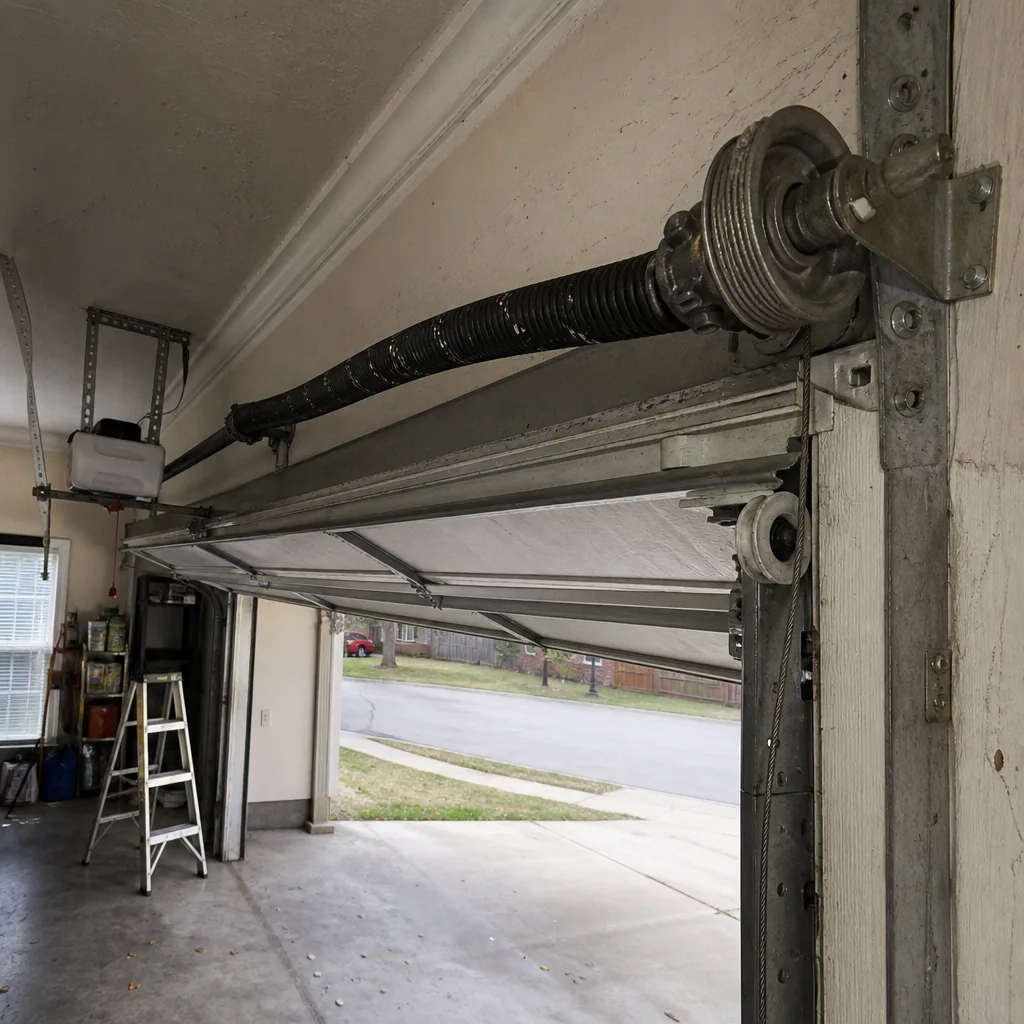 Before
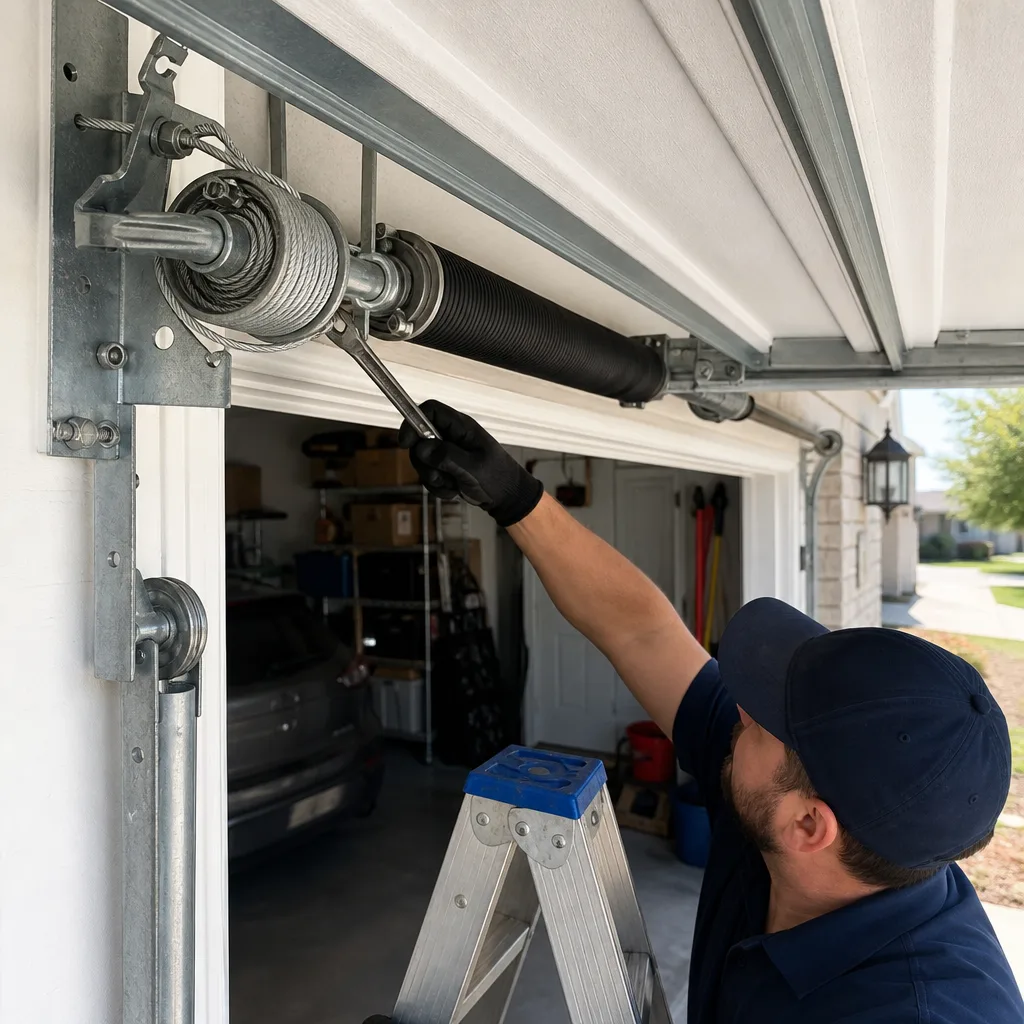 After
After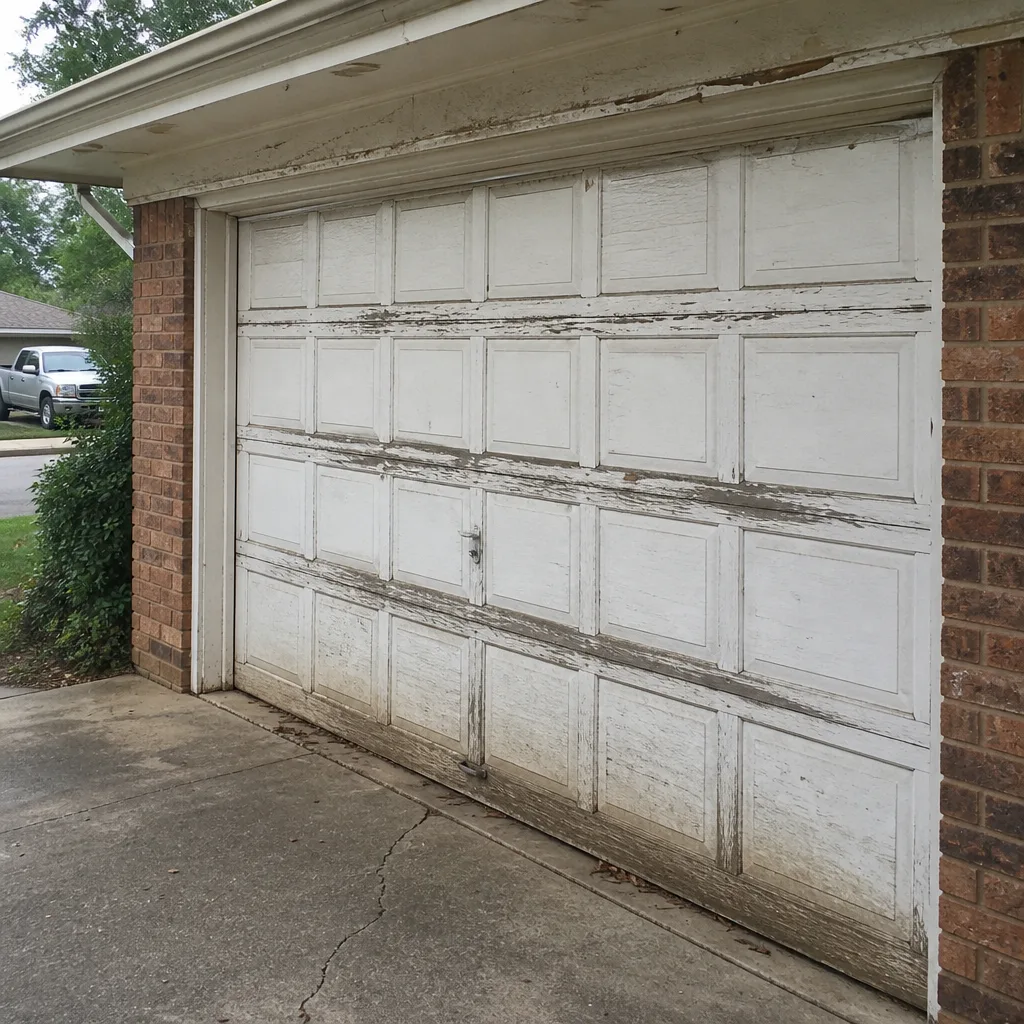 Before
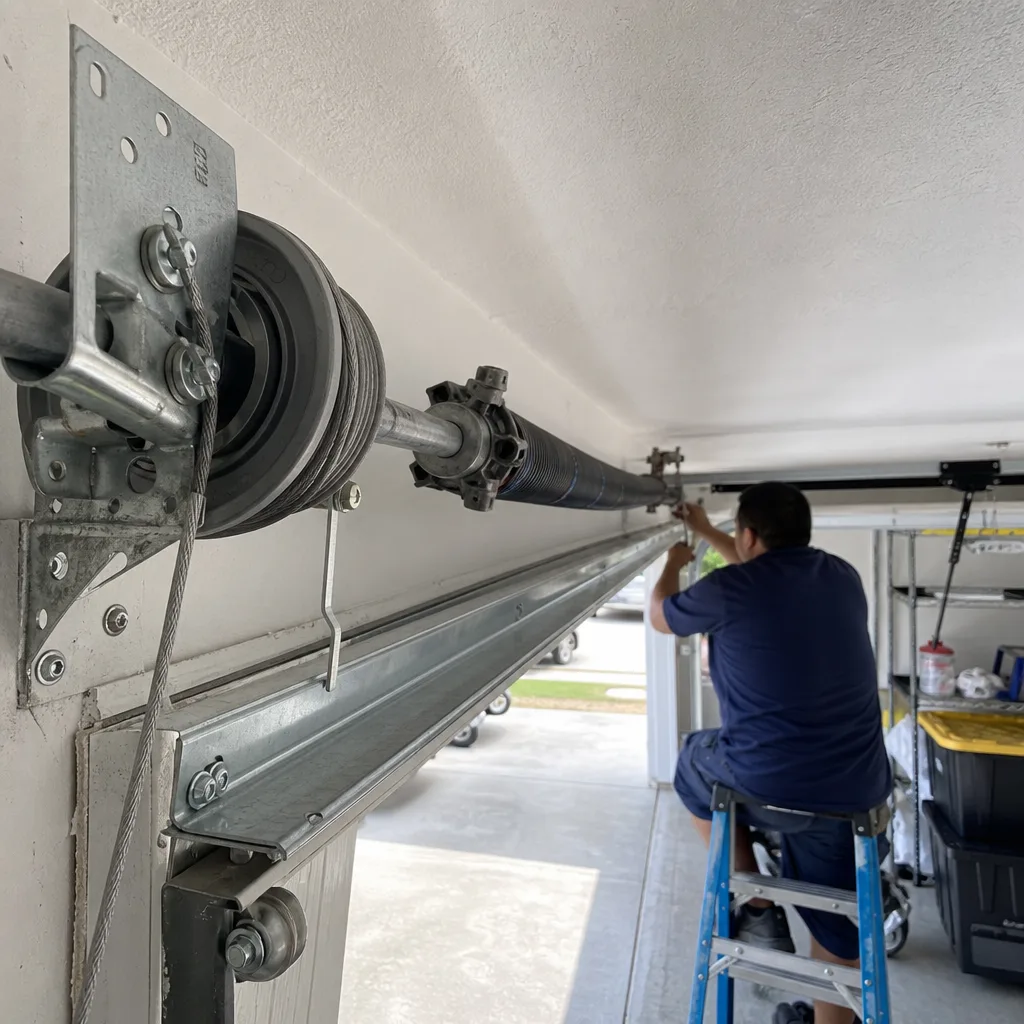 After
AfterDIY vs Professional Garage Door: The Fort Worth Homeowner’s Decision Guide
A garage door torsion spring under full tension holds enough stored energy to break a wrist or fracture an orbital bone. It looks exactly like a component you could swap with a socket set until it doesn’t. In Fort Worth, where summer heat cycles metal twice daily and winter northers snap brittle cables, we’ve seen the aftermath of that assumption for 42 years. This guide draws a precise line between what any careful homeowner can handle with an afternoon and a hardware store trip, and which tasks carry mechanical risk that a misstep turns into injury or a repair bill three times larger than the original problem. You’ll learn the cost math when DIY goes wrong (see our Garage Door Cost Breakdown: The Fort Worth Homeowner’s Reference for 2026), which opener brands have owner-serviceable parts, and how to scope a professional job so you pay for skilled labor, not for tasks you could have finished yourself.
Quick Answer
Most Fort Worth homeowners can safely handle weatherstripping, lubrication, photo-eye alignment, and cosmetic panel assessment. Torsion spring replacement, cable repair, track realignment, and opener motor work require a trained technician because the stored energy and electrical components create injury risk that no amount of online research eliminates. The dividing line is physics, not skill level.
Table of Contents
- What Homeowners Can Safely Do
- Why Torsion Springs Are Different
- The Real Cost When DIY Goes Wrong
- Opener Brands with Owner-Serviceable Parts
- How to Scope a Professional Job
- Fort Worth Climate and Your Garage Door
- Tools Worth Owning vs. Tools That Signal Stop
- Common Mistakes to Avoid
- When to Call a Professional
- Frequently Asked Questions
- The Bottom Line
What Homeowners Can Safely Do
There is honest work a homeowner can perform that extends a door’s life and catches problems before they become expensive-work covered in our Garage Door Repair Maintenance Checklist for Fort Worth Homeowners. These tasks share three traits: no stored mechanical energy, no electrical hazard, and a failure mode that is merely inconvenient rather than dangerous.
Weatherstripping Replacement
The rubber seal along the bottom and the vinyl stops on the sides and top degrade faster in Fort Worth than in milder climates. UV exposure in the western sun of Ridglea and the near-constant wind across open Tarrant County prairie dry out rubber faster than manufacturers rate for. Replacement bottom seal slides into a retainer channel with no tools beyond a utility knife and perhaps a flat screwdriver. Side and top weatherstripping nails or screws into place. Buy by the foot at any hardware store; match the profile to what you remove.
Lubrication
Silicone-based spray lubricant on rollers, hinges, and the torsion spring itself reduces noise and wear. Do not use WD-40; it is a solvent, not a lubricant, and attracts grit. Apply sparingly, wipe excess, and run the door through two cycles. This is a 20-minute task that prevents the grinding we hear most often in older Arlington Heights and Mistletoe Heights homes where doors haven’t been serviced in a decade.
Photo-Eye Alignment
The safety sensors near the floor send an invisible beam across the door opening. When misaligned, the door reverses immediately or refuses to close. Clean lenses with a dry cloth, check that both LEDs glow steady (not blinking), and loosen the wing nut to adjust angle until both lights match. Test by blocking the beam with a box; the door should reverse. This is the most common “repair” we are called for, and it takes five minutes.
Cosmetic Panel Assessment
Dents, rust spots, and peeling finish are information, not emergencies. Note their location and depth. A shallow dent in steel may be filled and painted; a rust spot that has pitted through suggests replacement is coming. This assessment helps you budget and helps any technician you call understand what they are walking into.
Remote and Keypad Battery Replacement
Coin-cell batteries in remotes and 9-volt or AA in keypads are owner-serviceable. Before assuming the opener has failed, replace batteries and reprogram per the manufacturer’s manual. Chamberlain and LiftMaster both maintain online libraries by model number.
- Locate the model number on the opener motor housing or remote back.
- Search the manufacturer’s support site for that model’s battery type and programming steps.
- Replace batteries, test from 20 feet, then test the keypad.
- If failure persists, the issue is likely the opener board or antenna, not the remote.
Why Torsion Springs Are Different
This is the section that matters most. Every other task in this guide carries risk proportional to the tool in your hand. Torsion springs carry risk proportional to the laws of physics, and local regulations may apply-see Garage Door Permits, Codes & Inspections in TX: What You Need to Know.
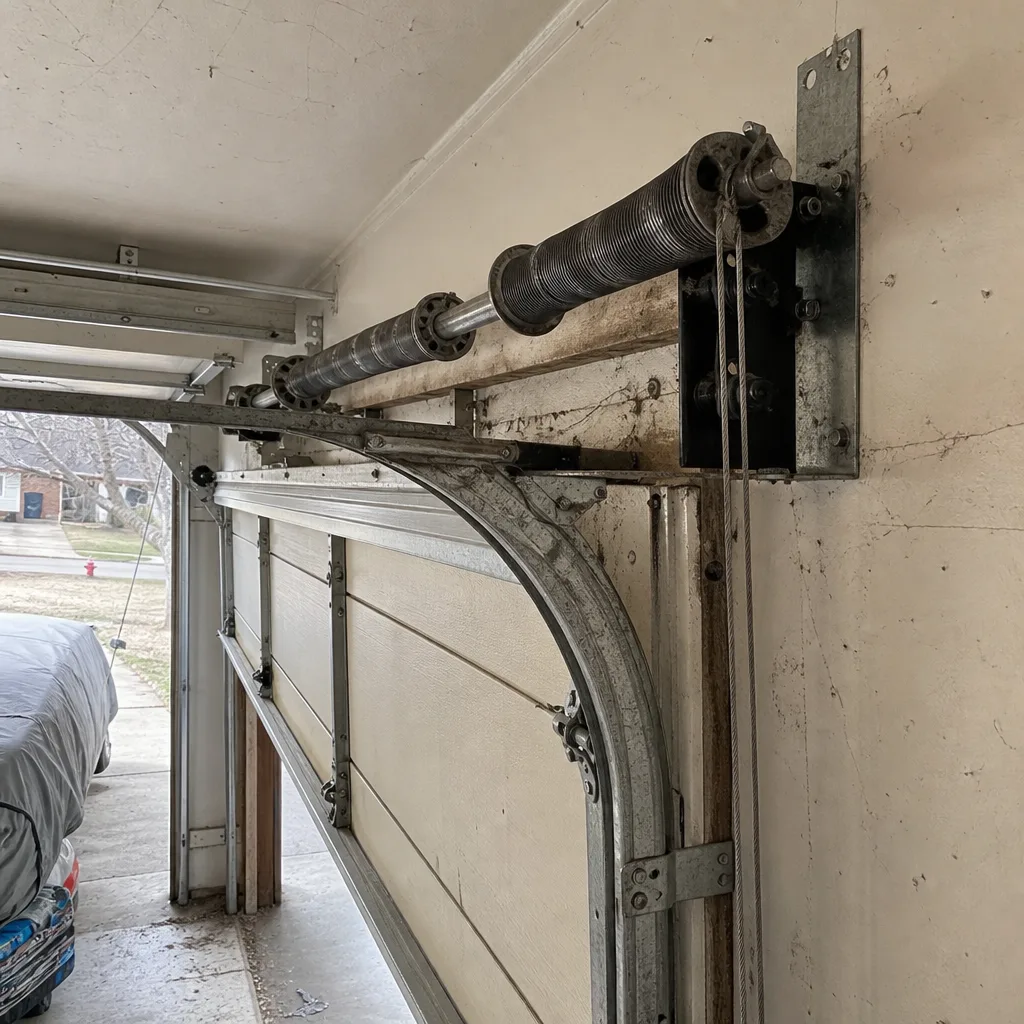
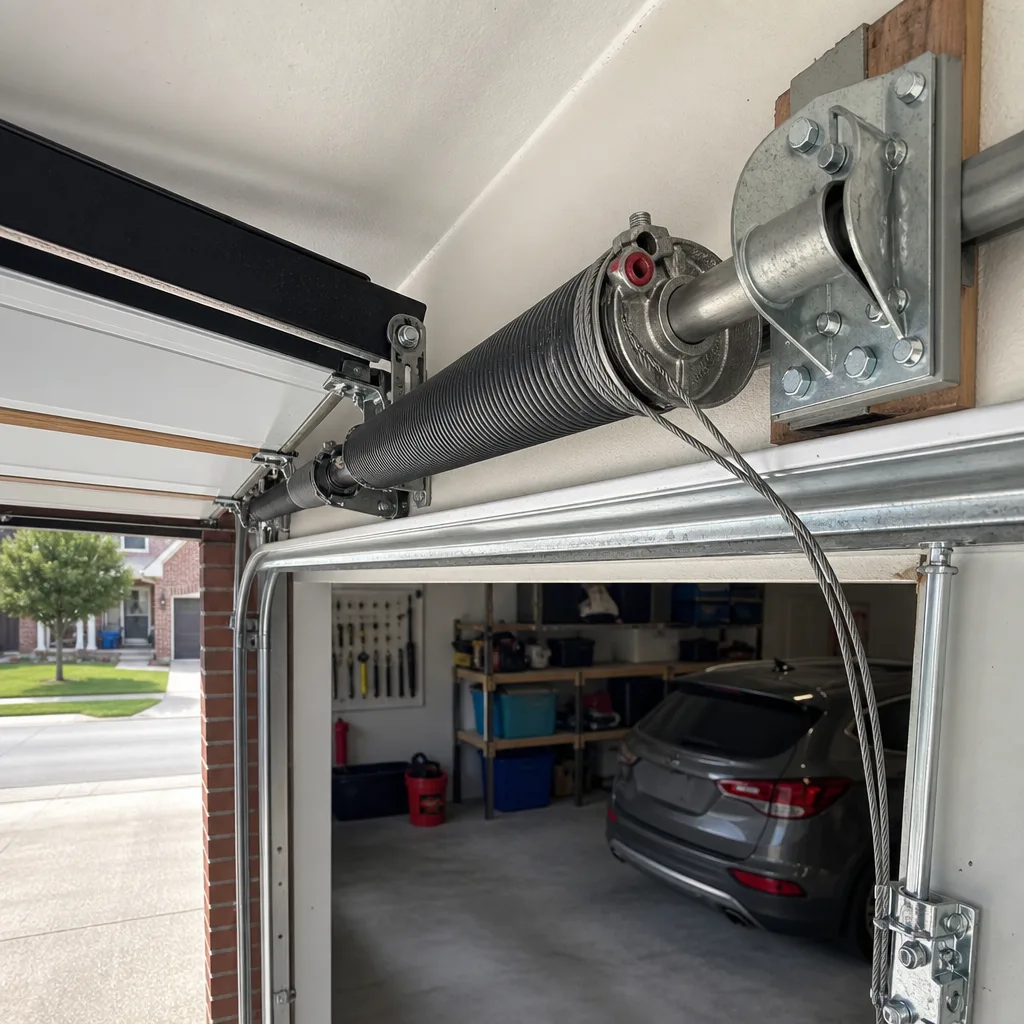
A standard residential garage door weighs between 150 and 400 pounds. The torsion spring above the door is wound tight enough to balance that weight so a 1/2-horsepower motor can lift it. The stored energy is measured in foot-pounds, and a fully wound spring holds roughly the same energy as a coiled rattlesnake of comparable size. When it breaks, it sounds like a gunshot. When it breaks while someone is attempting to wind or unwind it, the winding bars can strike with force sufficient to break bones in the hand, wrist, or face. We have seen the emergency room bills.
The danger is not that the job is complicated. The danger is that it looks uncomplicated. Two winding bars, a socket, and patience. What the videos do not show is the calibration: matching spring wire size, inner diameter, and length to door weight and drum size. A spring that is slightly too strong wears cables and hinges prematurely. A spring that is slightly too weak burns out the opener motor. And a spring that is wound with the door in the wrong position, or with bars that slip, releases all that energy in a quarter-second.
In Fort Worth, the climate compounds the hazard. Heat expansion and contraction stress springs through 40-degree daily swings in summer. A spring that was marginal in April may snap in July. The homeowner who attempts replacement during a 102-degree afternoon, when metal is expanded and grip is slick with sweat, faces conditions no online tutorial addresses.
We do not provide step-by-step spring replacement instructions. No responsible shop does. The garage door repair in Fort Worth that Mainspring performs includes spring work because our technicians carry calibrated spring stock, winding bars rated for the load, and the experience to recognize when a drum or cable has been damaged by the break. That recognition is not theoretical; it comes from thousands of doors in neighborhoods from Berkeley Place to Wedgwood, where construction eras and door vintages vary block by block.
The Real Cost When DIY Goes Wrong
Homeowners who call us after a DIY attempt rarely mention the money first. They mention the moment they realized they were out of their depth. But the money matters, and it follows a pattern we have tracked for years.
| Original Problem | DIY Attempt | Typical Result | Final Professional Repair Cost |
|---|---|---|---|
| Broken torsion spring | Homeowner purchases wrong spring, attempts winding | Spring slips, cable unspools, door crashes off track | $450-$780 (spring, cables, track, hinges, labor) |
| Frayed cable | Homeowner replaces one cable without releasing spring tension | Uneven lift, door jams, panel damage | $320-$560 (cables, panel repair, track realignment) |
| Noisy opener | Homeowner adjusts force settings, strips drive gear | Motor runs, door does not move; internal gear destroyed | $280-$520 (gear kit or full opener replacement) |
| Off-track door | Homeowner forces door back into track with crowbar | Bent track, damaged rollers, panel creasing | $380-$720 (track, rollers, panel work) |
| Sensor misalignment | Homeowner wires sensors incorrectly, shorts board | Opener logic board failure | $240-$480 (board replacement, programming) |
These ranges reflect Fort Worth market rates in 2024-2025, including parts markup and labor. The pattern is consistent: a $180-$340 professional repair becomes a $400-$700 repair because secondary damage occurred during the attempt. The homeowner pays for the original problem, the damage caused, and the additional time to sort out what was done.
There is a subtler cost. The door that is now misaligned or unbalanced wears components faster. Hinges fatigue. Rollers flatten. The opener motor works harder. What would have been a seven-to-ten-year service life compresses to four or five. The homeowner who “saved” $200 on a spring replacement pays $800 earlier than necessary for a full door and opener replacement.
Our garage door repair in Fort Worth includes a full balance and hardware inspection with every spring job because we have seen the downstream damage. The 90-Day Done Right Promise covers that inspection’s findings. If we miss something, we return. No paperwork, no dispute.
Opener Brands with Owner-Serviceable Parts
Not every opener problem requires a service call. Some manufacturers design for owner maintenance and publish documentation that is genuinely usable. Others seal the unit and expect depot replacement.
LiftMaster and Chamberlain (Same Parent, Shared Architecture)
These are the most common openers in Fort Worth homes built after 1995, and they maintain the best owner support. Model-specific manuals are available by entering the date code and model number at Chamberlain’s support portal. Owner-serviceable items include:
- Safety sensor replacement (plug-and-play wiring, color-coded)
- Remote and keypad programming (step-by-step in manual and online)
- Travel limit adjustment (screw dials on chain/belt drive units)
- Light socket replacement (unplug unit, swap socket, reassemble)
- Chain or belt tension adjustment (specific turn count per model)
What is not owner-serviceable: the logic board, the motor assembly, the gear and sprocket kit internal to the housing, and the capacitor. These require disassembly of a unit that is electrically live even when unplugged (capacitors hold charge). We have replaced boards that were damaged by static discharge during well-intentioned owner repair.
Genie
Genie openers, common in 1980s and 1990s Fort Worth construction, vary widely by era. Older screw-drive units have owner-adjustable limit switches and carriage release mechanisms. Newer belt-drive and chain-drive models have more sealed electronics. The critical step is finding the correct manual; Genie has used overlapping model numbers across decades, and the wrong manual leads to incorrect adjustment. If you cannot locate a manual by model number, call before attempting repair.
What to Check Before Buying Parts
- Confirm the model number on the motor unit label, not the remote.
- Verify the manufacture date; parts compatibility changes by production year.
- Download the official manual from the manufacturer’s site, not a third-party summary.
- Identify whether the symptom matches the manual’s troubleshooting chart exactly.
- If the manual directs you to “contact a trained technician,” stop there.
The garage door opener in Fort Worth service from Mainspring includes diagnostic that determines whether the issue is owner-serviceable before we quote any work. We have no interest in charging for a five-minute sensor alignment you could have handled. Our reputation is built on fixing what is actually broken and saying so when it is not.
How to Scope a Professional Job
The homeowner who has performed basic maintenance and assessment before calling gets more value from the service visit. The technician spends time on skilled labor, not on tasks that do not require training. Here is how to prepare.
Document What You Have Done
Note the date of lubrication, any adjustments attempted, and the exact symptom sequence. “Door began reversing three weeks ago, then stopped closing entirely yesterday” is more useful than “door doesn’t work.” The timeline distinguishes mechanical wear from electrical failure.
Clear the Bay
Move vehicles, storage, and obstructions from the door area and the space beneath the opener motor. The technician needs safe ladder placement and clear sight lines to tracks and springs. In Fort Worth’s older neighborhoods like Fairmount and Ryan Place, garages are smaller and often serve as primary storage; thirty minutes of clearing before the appointment saves thirty minutes of billable time.
Identify the Door and Opener
Photograph the label on the door interior (manufacturer, model, serial) and the opener motor housing. If labels are painted over, note any visible branding. Clopay and Amarr are common in Fort Worth; Wayne Dalton appears frequently in 1970s-1980s construction. This information lets the technician confirm parts availability before arrival.
Describe, Do Not Diagnose
Say “the left cable is frayed at the bottom bracket” rather than “I think the spring is broken.” Your observation is valuable; your conclusion may redirect the technician incorrectly. We have arrived for “broken spring” calls to find intact springs and a failed opener gear, because the homeowner assumed the most dramatic failure.
Ask What Preparation Reduces Cost
A direct question: “Is there anything I should do before you arrive that will make this faster?” An honest shop will tell you. We regularly direct callers to check sensor alignment or replace remote batteries before scheduling, because a needless visit helps no one.
The garage door installation in Fort Worth that Mainspring performs follows the same principle. We measure, quote a flat price, and schedule when the door is manufactured. We do not charge for the homeowner’s legwork in choosing a style or clearing the old door; we charge for skilled installation that is done right and finished in one visit.
Fort Worth Climate and Your Garage Door
The local environment shapes what fails and when. Understanding this helps you time maintenance and recognize when a problem is climate-accelerated rather than random.
Summer heat in Fort Worth routinely exceeds 100 degrees. Metal components expand, lubricants thin, and the daily cycle of expansion and contraction fatigues springs faster than in cooler climates. A door that is balanced in March may drift heavy by August as spring temper relaxes. The homeowner who notices the opener straining in late summer is observing real change, not imagination.
Wind is the overlooked factor. Tarrant County sits where southern plains meet hill country, and sustained winds of 20-30 mph are common. Wind load on a 16-foot door is substantial; hardware loosens, tracks flex, and openers with marginal force settings fail to close against pressure. After any wind event, check that the door sits square in the opening and that rollers have not walked out of track.
Hail complicates assessment. A storm that leaves no visible roof damage may dent door panels sufficiently to crack paint and expose steel to rust. Inspect after any significant hail; surface rust that is caught early is sanded and painted. Rust that penetrates requires panel replacement.
Finally, soil movement in parts of Fort Worth built on clay expansion soils affects door alignment. The slab shifts seasonally; the door frame does not. Gaps that appear and disappear with weather, or a door that binds only after heavy rain, suggest foundation movement rather than door failure. A technician can distinguish this; a homeowner who assumes the door is at fault may pay for unnecessary track work.
Tools Worth Owning vs. Tools That Signal Stop
The tools in your garage indicate what you can handle. The tools you do not own indicate what you should not start.
Worth Owning for Routine Maintenance
- Silicone spray lubricant (not WD-40)
- Socket set to 9/16″ for hinge and roller hardware
- Level, 24-inch, for track assessment
- Stepladder rated for your weight plus tools
- Work light with magnetic base
- Multimeter (for opener electrical testing only if you understand household current)
Tools That Signal Professional Territory
- Winding bars: solid steel bars inserted into cogs to add or release torsion spring tension. These are not substituteable with screwdrivers, pliers, or socket extensions. If you do not own proper winding bars, you do not perform spring work.
- Torsion spring calibration gauge: measures wire size to 0.001 inch. Spring selection without this tool is guesswork.
- Cable puller and come-along: used to set tension on extension spring systems. The failure mode is uncontrolled release.
- Strut bending brake: for reinforcing door sections after panel damage. Requires shop space and metalworking skill.
The absence of a tool is information. A homeowner who improvises a winding bar from a steel rod purchased at a hardware store has purchased a rod, not a safety-rated tool. The metallurgy, diameter tolerance, and surface finish of proper winding bars are specified because they have been tested against failure. We carry sets machined to those specifications because we have seen what happens when they are not.
Common Mistakes to Avoid
- Replacing only one spring on a two-spring door. Springs age in pairs; the unworn spring carries different tension, causing uneven lift and premature opener wear. In Fort Worth’s heat, the age gap accelerates failure of the remaining original spring.
- Adjusting opener force settings to compensate for a heavy door. This masks the underlying balance problem and strips the opener’s plastic drive gear. The correct fix is spring adjustment or replacement, not opener override.
- Ignoring a slow-opening door. A door that takes 15 seconds instead of 10 is not “getting old.” It is imbalanced, and the opener is working at capacity. The motor fails soon after.
- Using the emergency release handle without bracing the door. The red handle disengages the opener from the door; it does not hold the door open. A door that is not properly balanced will crash closed. In the western-facing garages of Westover Hills and Rivercrest, where afternoon heat has weakened springs, this is especially dangerous.
- Buying parts by door size rather than door weight. A 16×7 steel door can weigh 180 pounds or 340 pounds depending on gauge, insulation, and window count. Springs are specified by weight and cycle life, not dimensions. The wrong spring is worse than no spring.
- Attempting track adjustment with the door connected to the opener. The opener resists movement, hides binding, and can activate unexpectedly if the door is bumped. Disconnect and secure the door before any track work.
- Assuming a quiet door is a healthy door. Nylon rollers and belt-drive openers run quietly by design. Silence does not indicate balance, spring integrity, or hardware security. Test by manual lift: the door should stay at any height and move smoothly.
When to Call a Professional
Call when the task involves stored mechanical energy, electrical components beyond a battery, or structural assessment you are not trained to make. Specifically: broken or sagging springs, frayed or detached cables, doors off track or hanging unevenly, opener motors that hum but do not move, doors that have been struck by vehicles, and any situation where the door’s movement feels unpredictable.
Mainspring Garage Door Co. offers free estimates in Fort Worth. A live person answers at (817) 766-2028, including nights, weekends, and holidays. We arrive with springs, cables, openers, and hardware on the truck, and we state the flat price before any work begins. Most jobs are completed in a single visit. The 90-Day Done Right Promise covers every repair: if it is not right, we return at no charge, in writing, with no dispute process. For more guides & resources, visit our blog.
Frequently Asked Questions
Professional torsion spring replacement in Fort Worth typically ranges from $180 to $340 for a standard residential door, including parts, labor, and balance adjustment. The price varies with spring count, wire size, and whether cables or hardware were damaged when the spring broke. Call (817) 766-2028 for an exact quote; estimates are free.
Individual panel replacement is possible on some door models, but it requires releasing spring tension to remove the door from tracks, matching the panel profile and gauge exactly, and reinstalling with proper hardware torque. Most homeowners find that the cost of tools and the risk of improper reassembly exceed the labor charge for professional panel replacement. For doors over 15 years old, manufacturers may no longer produce matching panels.
This pattern in Fort Worth usually indicates heat-affected components: expanding metal binding in tracks, a logic board with failing capacitors that overheat, or photo-eye lenses that sun-glare at certain angles. It can also indicate a spring that is near failure, with heat expansion pushing it past the threshold of adequate tension. A technician can distinguish these causes with a short diagnostic visit.
Disconnect the opener using the emergency release handle, then lift the door manually to waist height and release. A balanced door stays in place. A door that falls closed is heavy; a door that rises is light. Either condition stresses the opener and indicates spring adjustment is needed. Do not attempt to adjust springs yourself.
At Mainspring Garage Door Co., the price quoted after inspection is the price on the invoice. We do not quote low to arrive and discover “additional problems.” If we find something unexpected, we explain it and quote the revised price before proceeding. You approve every dollar before work starts.
Yes. Our technicians arrive with torsion and extension springs in common wire sizes, cables, rollers, hinges, track hardware, and opener components for LiftMaster, Chamberlain, Genie, and other major brands. Most repairs are completed in a single visit without waiting for parts delivery.
The Bottom Line
The DIY-versus-professional question for garage doors is not about your competence with tools. It is about which tasks carry consequences that no amount of caution eliminates. Weatherstripping, lubrication, sensor alignment, and cosmetic assessment are within any careful homeowner’s reach and should be performed regularly. Torsion spring work, cable replacement, track realignment, and opener internal repair are not risk-tolerance decisions; they are physics decisions. The energy stored in a wound spring or the unpredictability of a door off its tracks creates injury potential that online tutorials cannot convey.
In Fort Worth’s climate of thermal stress and wind load, preventive maintenance by the homeowner and skilled repair by a trained technician are complementary, not competing, approaches. Do what you can do safely. Call for what you cannot. The cost of a professional repair is known; the cost of a DIY attempt that fails is not.
Written by Carl Dutton, Owner at Mainspring Garage Door Co., serving Fort Worth since 2016.