
Last updated September 10, 2026
Full 25-point door and opener safety check with every visit - springs, cables, rollers, tracks, and your LiftMaster or Chamberlain opener included
You get a price before we start. It does not change when the truck arrives.
 Before
 After
After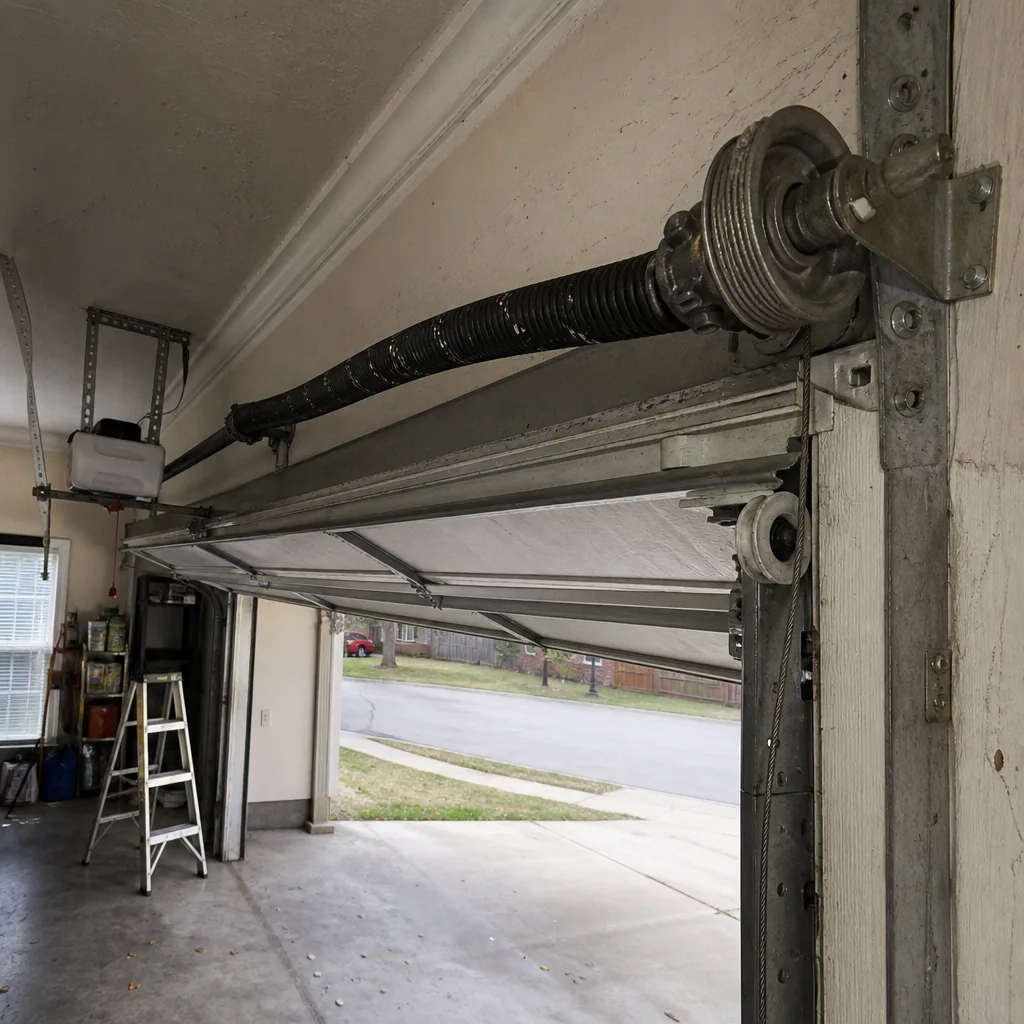 Before
 After
After Before
 After
AfterGarage Door Warning Signs: A Fort Worth Homeowner’s Reference Guide
A garage door that takes two seconds longer to open than it did six months ago is not “getting older.” It’s telling you the spring tension is dropping, and when it goes, it won’t wait for a convenient time. After 42 years in this trade, we’ve learned that garage doors rarely fail without warning. They announce problems weeks or months in advance through sounds, movements, and visual cues that most Fort Worth homeowners mistake for normal wear. This guide names each warning sign, explains what’s actually failing underneath it, and tells you honestly whether it can wait or can’t. For a broader overview of maintenance and selection, see our Complete Guide to Garage Door in Fort Worth.
Quick Answer
Garage doors give five categories of warning signs before they fail: sound changes (grinding, popping, squealing), movement changes (slowing, jerking, uneven travel), visual wear (frayed cables, rust, gaps in springs), balance problems (door won’t stay halfway open), and opener strain (motor labors or reverses unexpectedly). Most failures are preventable if caught early. The critical distinction: spring and cable warnings can cause sudden, dangerous collapse and should be addressed within days; opener or track issues can typically wait a week or two if the door still operates safely.
Table of Contents
- What Specific Sounds Mean (And Which Component Makes Them)
- Movement Changes That Predict Failure
- Visual Warning Signs You Can Spot Without Tools
- Fort Worth Conditions That Accelerate Wear
- Spring Problem or Opener Problem? How to Tell
- The Urgency Tier: What Can Wait and What Can’t
- The Compounding Problem: How Ignoring One Sign Creates Three
- The 5-Minute Monthly Safety Check Every Homeowner Should Do
What Specific Sounds Mean (And Which Component Makes Them)
Every sound a garage door makes has a source. The mistake homeowners make is treating all noise as “the door getting old.” Here’s what we’ve mapped from thousands of service calls across Fort Worth, from the historic homes of Fairmount to the newer builds in Walsh Ranch.
Grinding or Gritty Rumbling
This is almost always metal rollers wearing out in their tracks. Steel rollers without ball bearings grind against the track when their pins elongate or their housings crack. Nylon rollers make a different sound when they fail, more of a clicking chatter. In Fort Worth’s dust-prone climate, unsealed rollers collect grit that accelerates this wear. The grinding means the roller is damaging the track with every cycle. Left alone, you’ll need both rollers and track sections replaced.
Replacement cost in Fort Worth typically runs $180-$280 for standard steel rollers, $220-$340 for sealed ball-bearing nylon rollers. We carry both on every truck.
Popping or Snapping Sounds
This is the sound of a torsion spring with a broken coil catching and releasing as the door turns the spring through its cycle. Each pop is one more cycle closer to complete failure. In our experience, a popping spring has 20-40 cycles remaining. For a door used four times daily, that’s one to two weeks.
The danger: when the final coil breaks, the spring unwinds violently and the door drops. If you’re under it or near it, the door weighs 150-400 pounds. We’ve replaced springs in Mistletoe Heights where the homeowner heard popping for three weeks, then came home to a door crashed onto their car.
High-Pitched Squealing or Screeching
Dry hinges, dry bearings, or a dry opener chain or screw. The sound is metal-on-metal friction without lubrication. It’s the least urgent warning sign, but it’s also the easiest to address. A $12 can of lithium-based garage door lubricant applied to hinges, rollers, and the opener rail will often silence it entirely.
What not to use: WD-40. It evaporates and leaves a gummy residue that collects dust. In Fort Worth’s dry, dusty conditions, that residue becomes an abrasive paste within two months.
Scraping or Dragging on One Side
The door is out of vertical alignment, or a track bracket has loosened. The scraping sound is the door edge contacting the track or the frame. This creates a feedback loop: the scrape damages the door edge, which worsens the alignment, which deepens the scrape. We’ve seen this in Ridgmar and Westover Hills where settling foundations shift the frame slightly over years.
Rattling or Vibrating Panels
Loose hinges between door sections, or stripped screws in the opener arm attachment. The vibration means something is working itself free. A hinge bolt that falls out allows the door section to separate during travel, which can jam the door or derail it from the track.
Movement Changes That Predict Failure
Your garage door’s movement is the most reliable early warning system. Small changes in speed, smoothness, or position indicate specific problems developing.
The Door Opens Slower Than It Used To
Measure this. Time your door from fully closed to fully open. Do it again in a month. A spring losing tension makes the opener work harder against the door’s weight. The opener’s motor slows under load. In Fort Worth’s summer heat, garage temperatures reach 110°F, and motors under excess strain overheat and fail prematurely.
We’ve replaced LiftMaster and Chamberlain openers in Benbrook and Wedgwood that failed not from age, but from years of compensating for weak springs. A $220 spring replacement became a $680 opener replacement because the warning sign was ignored.
Jerky or Stuttering Travel
The door moves in small starts and stops instead of smooth continuous motion. This indicates:
- A frayed cable catching on the drum grooves
- A bent track section forcing the roller to climb over it
- A failing opener gear stripping under load
Each cause has a different fix and different urgency. A frayed cable is “stop using the door today.” A bent track might be “schedule within the week” if the door still seats fully closed. A stripping opener gear gives you warning time but will eventually leave the door stuck.
The Door Stops Short of Fully Open or Closed
Opener limit switches need adjustment, or the door is encountering resistance that triggers the safety reverse. First, check for obstructions in the track. If the track is clear, the door may be binding due to spring imbalance. One spring on a two-spring system has failed, and the remaining spring can’t pull the door through its full travel.
The Door Reverses Before Touching the Floor
Modern openers have force sensors that reverse the door when resistance exceeds a threshold. If the door reverses with nothing blocking it, either the close-force setting is too sensitive (adjustable) or the door is binding in its travel (requires repair). Don’t simply increase the close force to override the symptom. That disables a safety feature and masks a mechanical problem that will worsen.
The Door Hangs Crooked in the Opening
One cable has stretched more than the other, or one spring has lost tension. The door is being pulled unevenly. This places twisting stress on the door sections and the opener rail. Run the door to the halfway position and look at the gap between the door bottom and the floor. A difference of more than one inch means the imbalance is significant.
Visual Warning Signs You Can Spot Without Tools
You don’t need to be a technician to see these. Spend five minutes with the door closed and the opener disconnected.
Spring Gaps or Elongation
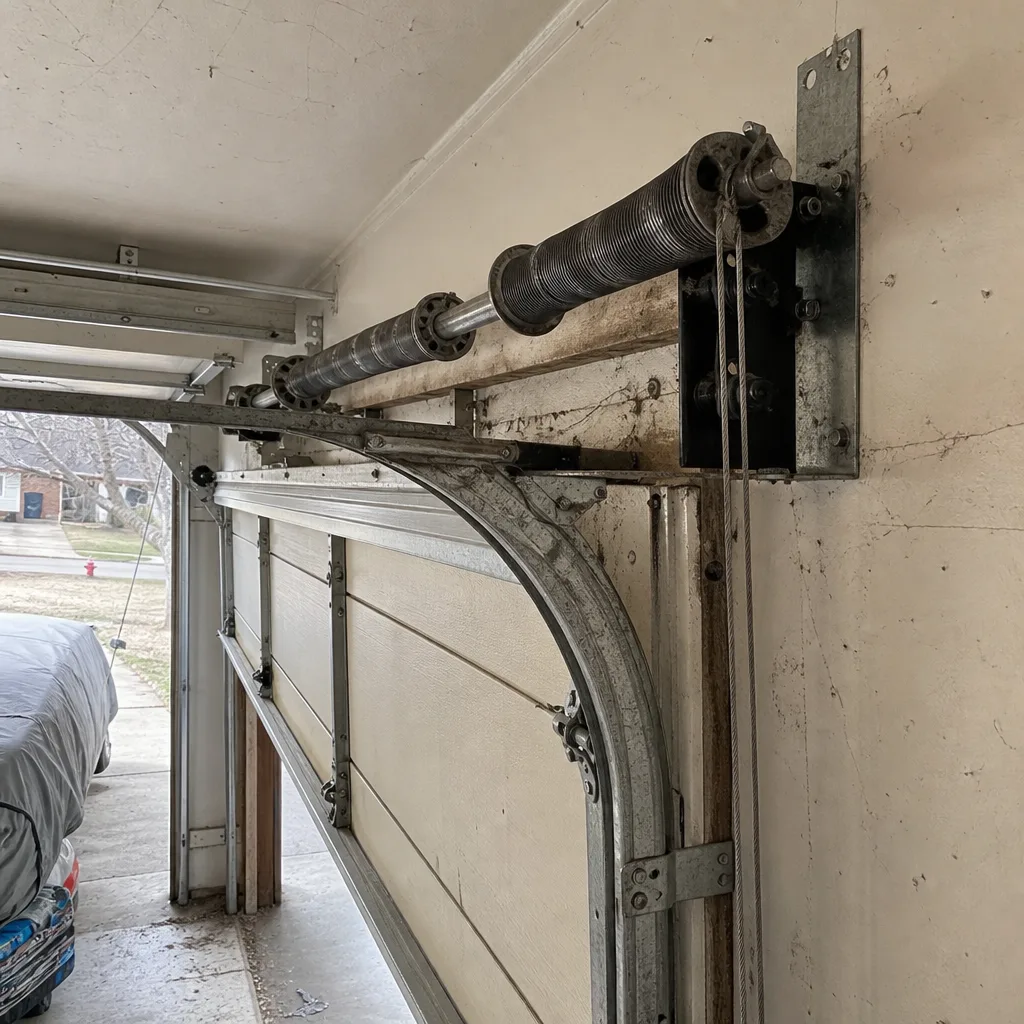
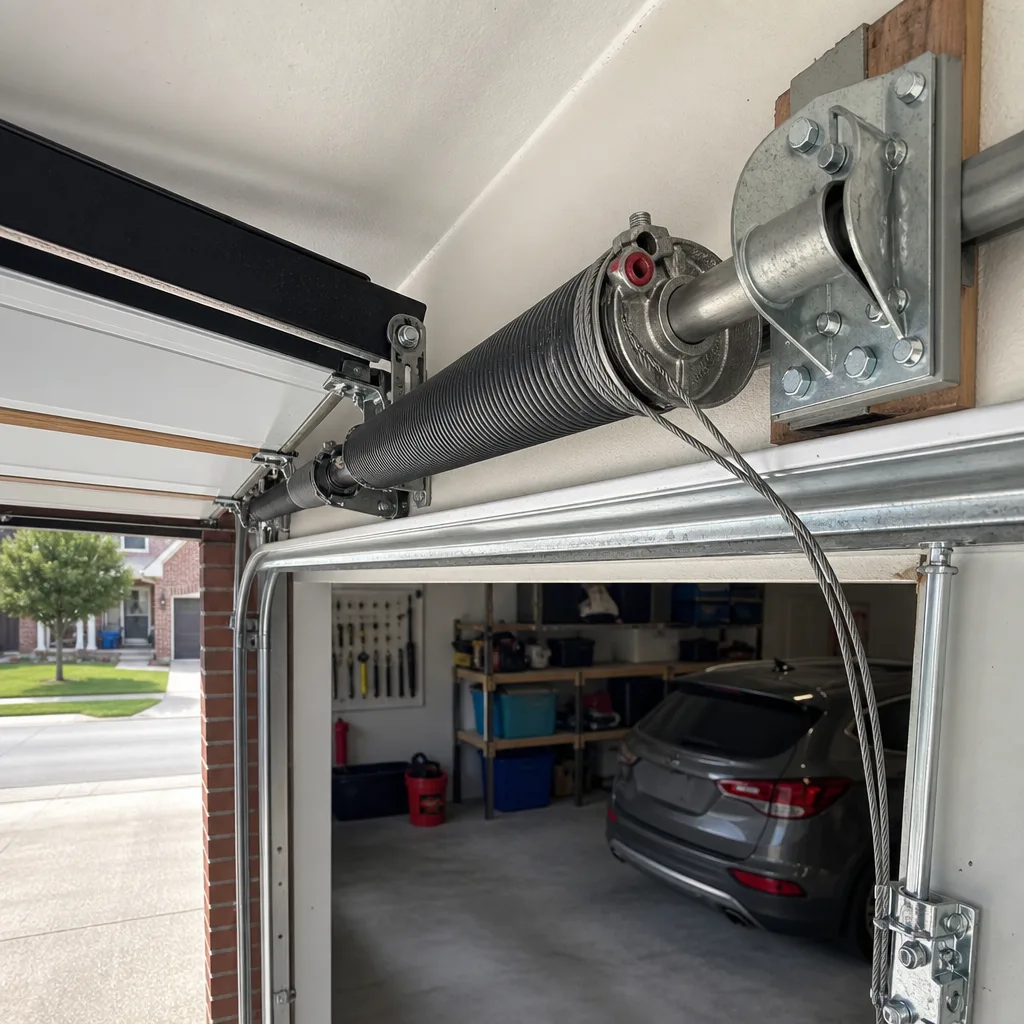
Torsion springs are wound tightly when the door is closed. Look at the coil spacing. A healthy spring has coils that sit nearly touching. A gap of even a quarter-inch between coils means the spring has stretched and lost tension. A visible separation where a coil has broken is an immediate “do not use” condition.
In Fort Worth, we see accelerated spring corrosion from humidity spikes before summer storms. Surface rust is cosmetic. Deep pitting that you can catch with a fingernail means the spring is structurally compromised.
Frayed or Rust-Stained Cables
Lift cables run from the bottom corners of the door up to the drums. Examine them where they wrap around the bottom bracket. Fraying looks like unwound wire strands protruding from the cable bundle. Even a few frayed strands mean the cable is failing. A snapped cable lets one corner of the door drop free, which jams or derails the door and damages the sections.
Rust staining on the cable or the concrete below it means moisture is entering the cable core. The cable looks intact but is rotting from inside. We’ve replaced cables in Arlington Heights where the exterior looked fine but the core was powder.
Worn or Cracked Rollers
Pull the door to the halfway position and inspect each roller. Nylon rollers crack at the wheel hub. Steel rollers show flat spots or bearing seizure (the wheel won’t spin freely). A roller that doesn’t roll drags and wears the track.
Track Dents, Bends, or Gaps at Joints
Vertical tracks should be plumb. Horizontal tracks should slope slightly down toward the back of the garage. Look for dents from vehicle contact, gaps where track sections meet, or brackets pulling away from the wall. In Fort Worth’s clay soils, we’ve seen garage slab movement cause track misalignment even when the track itself is undamaged.
Door Panel Damage
Hail dents from March and April storms do more than look bad. They stiffen the panel, changing how it flexes through the curved transition between vertical and horizontal track. Over time, this stresses the hinge points and can cause the panel to crack at the edges. We’ve replaced lower panels in Keller and Southlake where hail damage from two years prior led to hinge failure.
Bottom Seal Deterioration
The rubber seal across the door bottom keeps water, dust, and pests out. When it cracks or flattens, water enters during Fort Worth’s sudden downpours. That moisture rusts the bottom of the door sections and the hardware. A $25 seal replacement prevents $400+ in corrosion damage.
Fort Worth Conditions That Accelerate Wear
Garage doors in Fort Worth face specific stresses that homeowners in milder climates don’t encounter. Understanding these helps explain why your door may wear faster than you expect.
Clay Soil Settlement
Fort Worth sits on expansive clay soils that shrink and swell with moisture changes. A garage slab that rises or falls even half an inch changes the geometry of the entire door system. The frame twists slightly. The tracks go out of plumb. The door binds in its travel. We’ve done alignment corrections in River Oaks and Crestwood where the root cause was slab movement, not door wear.
Signs of settlement-related problems: the door scrapes on one side only, gaps appear between the door and frame on one side, or the door operated fine for years and suddenly developed problems with no other changes.
Temperature Extremes
Fort Worth garages see 30°F winter lows and 110°F+ summer highs. Metal springs fatigue faster with thermal cycling. Opener electronics fail at temperature extremes. Lubricants thin in summer heat and thicken in winter cold. We schedule more spring replacements in late July and early January than any other months.
Hail and Wind
The National Weather Service records an average of 3-4 significant hail events annually in Tarrant County. Hail dents panels, damages weatherstripping, and can knock tracks out of alignment if the door is struck while moving. After major hail events, we always recommend a professional inspection even if the door appears to operate normally.
Dust and Grit
Fort Worth’s dry, windy conditions blow fine dust into garage door components. Unsealed rollers and hinges grind this dust into abrasive paste. Tracks accumulate grit that accelerates roller wear. Regular cleaning and proper lubrication matter more here than in humid climates where moisture keeps dust settled.
Hard Water Staining
Many Fort Worth neighborhoods have mineral-heavy water. Sprinkler overspray leaves white calcium deposits on aluminum doors and hardware. These deposits corrode aluminum and seize steel components. If you see white staining on your door or track, rinse it monthly and check hardware for corrosion.
Spring Problem or Opener Problem? How to Tell
Homeowners often misdiagnose opener problems when the real issue is springs, or vice versa. This matters because replacing a $600 opener won’t fix a $220 spring problem, and replacing a spring won’t fix a stripped opener gear. Here’s how to distinguish them without tools.
The Disconnection Test
Pull the red emergency release cord to disconnect the opener. Now lift the door manually.
- If the door is heavy and won’t stay at waist height: Spring problem. The springs are not counterbalancing the door’s weight. The opener has been compensating, which shortens its life.
- If the door lifts smoothly and stays put: Springs are fine. The problem is in the opener or the connection between opener and door.
- If the door lifts smoothly but drifts down: Springs have lost some tension but haven’t failed completely. Schedule service within two weeks.
- If the door is heavy on one side or hangs crooked: One spring or cable has failed. Stop using the door.
The Sound Location Test
Run the door and listen. Grinding from the motor head means opener problem. Popping from above the door means spring problem. Scraping from the track sides means roller or track problem. Clicking from the rail means stripped opener gear or trolley.
The Age Correlation
Torsion springs are rated for 10,000 cycles. At four cycles daily, that’s about seven years. If your springs are 6-10 years old and problems appear, suspect springs first. Openers last 10-15 years with normal use. If the opener is newer and problems appear, suspect installation or adjustment issues before component failure.
We’ve serviced homes in Colonial and Berkeley Place where the previous homeowner replaced the opener but not the original springs. The new opener failed in three years from overwork. The correct fix would have been springs first, then assess if the opener truly needed replacement. For more guides & resources, visit our blog.
The Urgency Tier: What Can Wait and What Can’t
Not every warning sign demands emergency response. But some do, and misjudging the difference is expensive or dangerous. We’ve organized every warning sign into three tiers based on what we’ve seen fail and how fast.
Tier 1: Stop Using the Door, Call Today
- Broken spring coil with visible gap
- Frayed lift cable with exposed strands
- Door that won’t stay open or closed without support
- Opener that reverses unpredictably or runs without door movement
- Track separation from wall or ceiling mount
- Door that has come off the track
These conditions risk sudden door drop, uncontrolled spring release, or structural damage. The door can fall on a person, vehicle, or pet. The repair cost typically doubles if the door is used after these signs appear.
Tier 2: Schedule Within One to Two Weeks
- Slow operation with increased opener noise
- Jerky travel that still completes the cycle
- Visible rust on springs without breakage
- Worn rollers that still roll
- Minor track dents that don’t cause binding
- Door that seals unevenly but closes fully
These problems worsen progressively. Addressing them prevents Tier 1 failures. The cost difference is significant: a roller replacement at this stage is $180-$280. Waiting until rollers seize and damage tracks raises the repair to $450-$680.
Tier 3: Monitor and Schedule at Convenience
- Minor squeaking that lubrication quiets
- Cosmetic panel dents that don’t affect operation
- Faded paint or minor surface rust on hardware
- Weatherstripping that still seals but shows wear
- Remote range slightly reduced (likely battery)
These don’t affect safety or function in the near term. Include them in your next scheduled maintenance or address them when convenient.
The Compounding Problem: How Ignoring One Sign Creates Three
This is the pattern we see most often, and it’s the one that turns a $220 repair into a $1,400 replacement. Understanding the cascade helps you interrupt it early.
The Classic Cascade: Spring to Opener to Door
A spring loses 15% of its tension. The door becomes heavier. The opener motor strains, drawing more amperage. The motor overheats, degrading its internal thermal protection. The opener gear strips under the excess load. The stripped gear allows the trolley to slam the door hard in both directions. The impact loosens hinges and cracks door sections.
Timeline: spring tension drops over 3-6 months. Opener gear strips 2-4 months after that. Door damage appears 1-3 months later. Total elapsed time: 6-13 months from first warning to multiple-component failure.
Cost progression in Fort Worth market:
- Spring replacement at first warning: $220-$340
- Spring + opener gear replacement after gear strips: $580-$820
- Spring + opener + door section replacement after full cascade: $1,200-$1,800
The Track Cascade: Roller to Track to Opener
A worn roller drags instead of rolling. It wears a flat spot in the track. The flat spot causes jerky travel. The jerky travel loosens track brackets. The loose brackets allow track misalignment. The misalignment increases opener strain. The opener’s safety reverse triggers unpredictably. The homeowner overrides the safety setting. The door eventually jams or derails.
We’ve repaired this exact sequence in Meadowbrook and Stop Six. The homeowner heard grinding for months, then the door jammed with their car inside on a Monday morning.
The Moisture Cascade: Seal to Rust to Cable
Bottom seal fails. Water enters during storms. Water pools in the bottom door section. Hardware rusts. The rusted bottom bracket weakens. The lift cable, attached to that bracket, works at an angle. The angled cable frays against the bracket edge. The frayed cable snaps. The door drops on one corner and derails.
Total time from seal failure to cable snap: 8-18 months depending on storm frequency. The fix that would have prevented it all: a $25 seal and 10 minutes of installation.
The 5-Minute Monthly Safety Check Every Homeowner Should Do
This check catches most warning signs before they become failures. Do it on the first Saturday of each month. It requires no tools and no technical knowledge.
- Visual scan with door closed: Look at springs for gaps or rust. Look at cables for fraying. Look at rollers for cracks. Look at tracks for dents or gaps. Look at the bottom seal for cracks or flattening.
- Balance test: Disconnect the opener with the red cord. Lift the door to waist height. It should stay there without rising or falling. If it drifts, springs need attention.
- Travel test: With the opener still disconnected, lift and lower the door manually. It should move smoothly with moderate effort. If it’s heavy, jerky, or binds, there’s a mechanical problem.
- Auto-reverse test: Reconnect the opener. Place a 2×4 board flat on the floor where the door closes. Run the door down. It should reverse on contacting the board. If it doesn’t, the safety system needs adjustment or repair. This is federal safety law, not optional maintenance.
- Listen test: Run the full cycle and listen. New sounds mean new problems. Compare to your mental baseline from last month.
If any test fails, call for service. Don’t wait for the next monthly check.
Common Mistakes to Avoid
- Assuming slow operation means the opener is dying. Nine times out of ten, it’s springs losing tension. Replacing a healthy opener wastes money and doesn’t solve the root problem.
- Ignoring seasonal changes. Fort Worth’s temperature swings affect door operation. A door that worked fine in October may show problems in January. This isn’t coincidence; it’s thermal contraction and lubricant thickening.
- Using the wrong lubricant. WD-40, 3-in-1 household oil, and grease attract dust. Use lithium-based garage door lubricant only. Apply sparingly to hinges, rollers, and the opener rail. Never lubricate the track itself; the rollers need friction to roll.
- Continuing to use a door after hearing popping springs. We’ve replaced doors in Fort Worth that crashed onto vehicles because the homeowner “meant to call next week.” Popping springs have no predictable remaining life.
- Adjusting opener force settings to compensate for mechanical problems. This disables safety features and accelerates wear. The correct fix is addressing the mechanical problem, not masking it with settings.
- Neglecting after-storm inspection. Fort Worth hail can damage tracks and panels with no immediate operational effect. Inspect after every significant storm. Catching hail damage early prevents alignment problems months later.
- Trying to adjust or replace springs yourself. Torsion springs store lethal energy. The winding process requires specialized tools and training. Every year, homeowners are seriously injured or killed attempting DIY spring work. This is not a cost-saving opportunity; it’s a call-a-professional situation.
When to Call a Professional
Call when any Tier 1 warning sign appears. Call when a monthly safety check fails. Call when you’re unsure which tier a symptom belongs in. The cost of a service call is small compared to the cost of a door collapse or a failed opener.
Specific scenarios that always warrant professional inspection: any spring or cable concern; any door that has come off its track; any opener that runs without door movement or reverses unpredictably; any door that won’t stay open or closed; any significant change after a storm or foundation event; any door over 10 years old that hasn’t had professional maintenance.
Garage Door Repair in Fort Worth from Mainspring Garage Door Co. includes full system inspection with every service call. We state the flat price before any work begins, and every job carries our 90-Day Done Right Promise in writing. Free estimates are available at (817) 766-2028.
Frequently Asked Questions
Standard torsion spring replacement in Fort Worth typically costs $220-$340 for a single spring, or $340-$480 for a dual-spring system, depending on door size and spring type. We quote the exact price after measuring your door’s weight and height, and we state that price before any work starts. Call (817) 766-2028 for a free estimate.
No. Springs give warning signs: slower door operation, visible coil gaps, popping sounds during operation, or a door that feels heavier to lift manually. The warning period is typically weeks to months. The failure appears sudden only because the homeowner didn’t recognize the signs. After 42 years in this trade, we’ve never seen a spring that failed with zero prior indication.
Disconnect the opener with the red emergency release cord and lift the door manually. If it’s heavy and won’t stay at waist height, the springs are failing and the opener has been compensating. If the door lifts smoothly and stays put, the springs are fine and the problem is in the opener. This test takes 30 seconds and prevents misdiagnosis.
No. Popping sounds mean a coil has broken inside the spring and is catching and releasing through each cycle. The remaining coils are under excess stress and can fail completely without warning. When they do, the door drops with its full weight. Do not stand near or under the door, and do not park vehicles beneath it. Schedule immediate professional service.
Professional inspection and tune-up every 12-18 months is appropriate for most Fort Worth homes. Doors in high-use households (more than six cycles daily), homes with significant slab settlement, or areas with frequent hail exposure benefit from annual service. Our $89 Seasonal Tune-Up includes spring tension check, hardware inspection, lubrication, safety system test, and wear assessment.
No. At Mainspring Garage Door Co., we quote the flat price before any work begins. If inspection reveals additional problems, we explain them and quote separately before proceeding. You approve every charge. There are no surprises on the bill. This is how we’ve operated since 1984, and it’s why customers in Fort Worth call us back.
The Bottom Line
Garage doors communicate constantly. The grinding, the slowing, the slight lean to one side, these are not quirks of age. They are specific, diagnosable warnings with predictable consequences. The homeowner who learns this language avoids sudden failures, prevents the compounding damage that multiplies repair costs, and never faces a garage door that won’t open with a car inside and an appointment to keep.
In Fort Worth’s particular climate of clay soils, temperature swings, and hail, these warnings accelerate faster than in milder regions. The monthly five-minute check, the willingness to call when uncertain, and the discipline to address Tier 1 signs immediately, these habits separate the $220 repair from the $1,400 replacement.
We’ve stood behind our work for 42 years with the 90-Day Done Right Promise, and we answer our phones with a live person at any hour. If your door is showing warning signs you can’t interpret, or if you simply want the confidence of a professional inspection, Mainspring Garage Door Co. home is where you’ll find us, or call directly at (817) 766-2028.
Written by Carl Dutton, Owner at Mainspring Garage Door Co., serving Fort Worth since 2016.